Your Autistic Child's Future: Independence and Adulthood
On this page
What you can do today
- Swap fear for the long game — progress continues well past childhood.
- Teach one small life skill at a time, woven into everyday life.
- Lean into your child's strengths and interests — they often lead somewhere.
- Start thinking about transitions early, and involve your young person in decisions.
- Find out what adult support exists where you live, when the time comes.
Will my autistic child have a future?
Yes. Autistic children become autistic adults with varied, meaningful lives. Independence is built in small steps, at their pace. There is no single path. Start teaching one life skill in the day you already have, and plan transitions early with them in the room.
If you lie awake worrying about your child's future, you're not alone — and there's real reason for hope. Autistic adults live across the whole range of independence: some live fully independently, some with varying support, all capable of meaningful, happy lives.
Two things help more than anything: letting go of comparison, and remembering that development doesn't stop at 18. Many autistic people make big strides in their late teens and twenties. And special interests and strengths often grow into hobbies, community and even careers. Your child's path will be their own — and that's okay.
Building life skills over time
Independence is built brick by brick, starting young:
- Pick one skill at a time — making a snack, handling money, telling the time, doing up a coat, a chore.
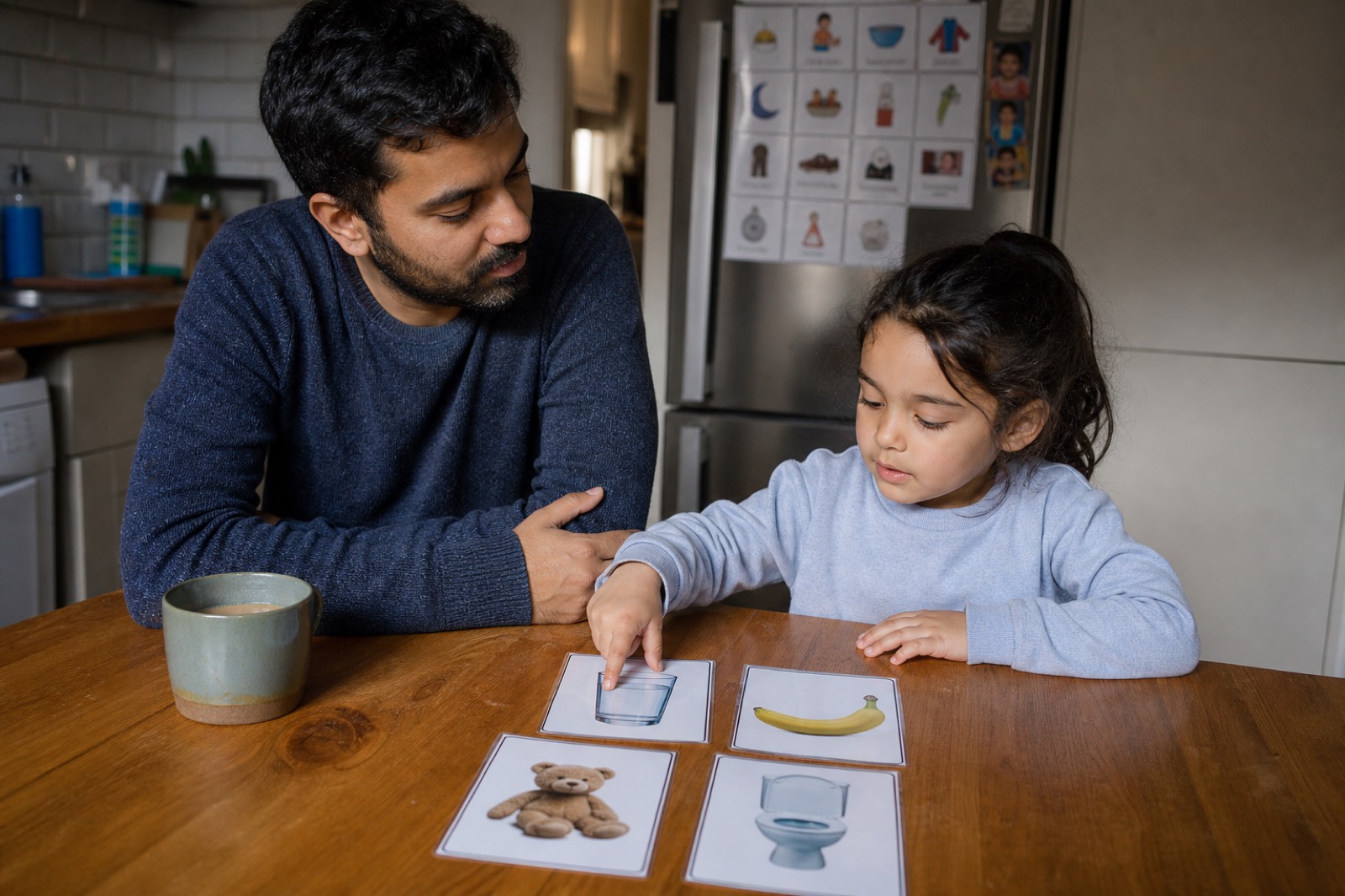
- Break it into steps and teach with checklists and visual schedules.
- Practise in real life — let your child do the step themselves, even when it's slower.
- Build up gradually towards bigger skills: cooking, travel, self-care, time management, looking after their own needs.
- Balance support and autonomy — do with, then near, then step back.
Every small skill mastered now is a building block for adult life.
Planning transitions early
Big changes go better with early, gradual planning:
- Think ahead about leaving school, further education, training, work and where your young person might live.
- Use transition planning — many education systems have a formal process as your child approaches adulthood (it varies by country; ask your child's school or local services).
- Involve your young person in decisions about their own future — their preferences matter most.
- Connect to adult services early, as the move from children's to adult support can take time to arrange.
For the in-between years, see parenting an autistic teenager.
Work, living and support
Adulthood offers a range of possibilities:
- Work — from independent employment to supported and tailored roles. Strengths-based, interest-led work suits many autistic adults; some employers actively value autistic skills. Disclosure (telling an employer) is a personal choice with pros and cons.
- Living — from independent living to supported living and everything between, depending on need.
- Support — adult disability, health and social-care services exist (availability varies by country).
- Self-advocacy and identity — a positive autistic identity and the ability to ask for what they need are some of the most valuable things you can nurture now.
The future isn't one fixed destination — it's a path you and your child shape together, one step at a time.
What can I do now for my autistic child's adult life?
Start small and early: everyday choices, money in tiny amounts, travel training, and a way to communicate needs without you in the room. Independence is a pile of specific skills, not a cliff at 18. Hope is realistic; a single prescribed future is not.
Talk about work, housing and friendships as options, not tests. Keep documents (diagnosis, EHCP if you have one, what helps) in one folder. See teenagers and financial support. Who should skip this: scare pieces about 'what happens when you're gone' with no practical next step.
What should we practise this year, not at 17?
One daily living skill, visually, until it is boring: teeth, a snack, a bag, a simple journey. Involve them in tiny choices. Interests often become the bridge to study or work. Do not wait for a magical maturity date.
Use visual schedules as checklists they can own. For school-age rights and plans see IEP basics and, in England, the EHCP guide.
Frequently asked questions
Will my autistic child be independent?
Many autistic adults live independently, and many thrive with some support — independence looks different for everyone. It's built gradually over years, so focus on small life skills now and remember development continues well into adulthood.
What life skills should I focus on?
Start with everyday ones — self-care, simple cooking, money, telling the time, travel and chores — taught in small steps with checklists and visuals. Build towards bigger skills over time, letting your child practise for real.
Can autistic adults work?
Yes — across a wide range of roles, from independent to supported employment. Strengths- and interest-led work suits many autistic adults, and some employers actively value autistic strengths. Whether to disclose autism at work is a personal choice.
When should I start planning for adulthood?
Earlier than you might think. Many systems begin formal transition planning in the early-to-mid teens, and arranging adult services can take time. Start conversations early and involve your young person in decisions about their future.
Sources and content notes
Published by Autism Parent Guide. This is general educational information.
Clinical review involvement
General practitioner (GP) — name withheld
A general practitioner (GP), who prefers to remain anonymous, has been involved in reviewing the site since its development began and as content has been added. This describes ongoing involvement in the site. Individual article review dates and the scope of each review are not currently published.
References for this guide
- Autism and adult lifeNHS
- Leaving school: transitions in EnglandNational Autistic Society
Content updated . This date records an editorial change, not a clinical review. Read our editorial policy or report a correction.
Keep reading & doing
Free tools to try
Not medical advice. This article is general information, not a substitute for professional assessment. Every child is different — always talk to a qualified professional about your individual child.