School Support & IEP Basics for Parents of Autistic Children
On this page
What you can do today
- Ask who coordinates special-education support at your child's school and request a meeting.
- Write a short one-page profile of your child: strengths, triggers, what helps, what to avoid.
- List 2–3 specific, concrete things that would help right now (e.g. a quiet space, a visual timetable).
- Put requests in writing (email) so there's a record, and keep copies of replies.
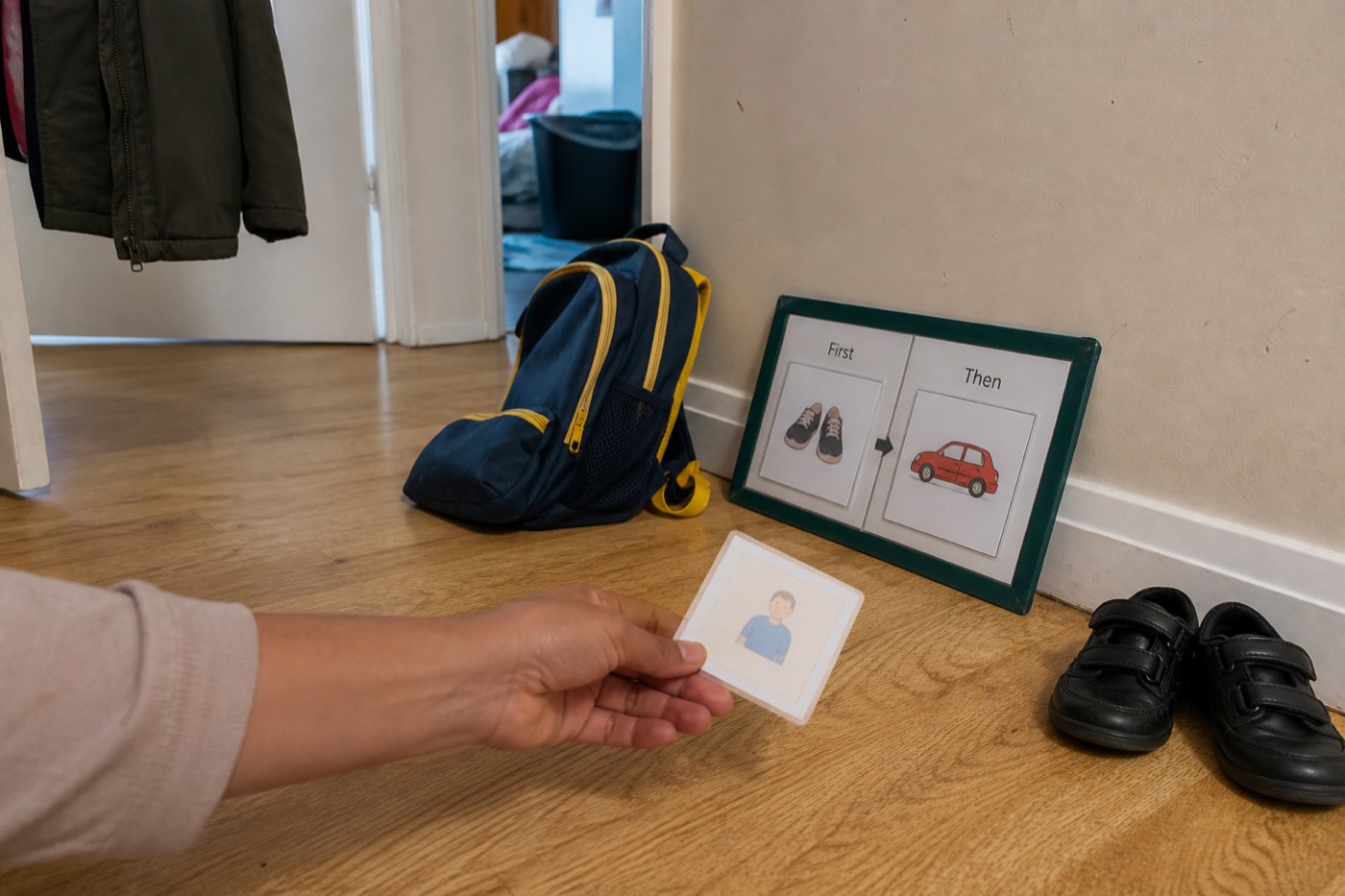
- Share the supports that work at home — including any visual schedules or cards your child uses.
What is an IEP or support plan in practice?
A written document of needs, goals, and the specific help school will provide, with who and how progress is checked. Names vary by country. Schools can support needs before a diagnosis. Come with a one-page profile and two or three concrete asks.
An IEP — Individualised Education Program or Plan — is a written document that sets out:
- Your child's needs and current strengths
- Goals for a set period (usually reviewed each term or year)
- The specific support, adjustments and resources the school will provide
- Who is responsible, and how progress is measured
The name varies by country — you may hear IEP, support plan, learning plan, individual support plan, or in some places an EHCP (a more formal legal plan for higher needs). The principle is the same everywhere: support should be planned, written down, specific to your child, and reviewed regularly. A diagnosis can help access certain plans, but schools can and should support a child's needs even before any diagnosis.
Your rights as a parent
Exact laws differ by country, but across most systems you have the right to:
- Be informed and involved in decisions about your child's support
- Request an assessment of your child's needs
- See and contribute to your child's plan, and ask for changes
- Have reasonable adjustments made so your child can access learning
- Use a complaints or appeals process if you disagree
You are not asking for a favour — appropriate support is your child's entitlement. Knowing this helps you advocate calmly and confidently.
Working well with teachers
A strong home–school partnership helps your child more than anything. To build it:
- Share a one-page profile — your child's strengths, triggers, what calms them, and what to avoid. Teachers love a clear, short summary.
- Be specific — instead of "he gets overwhelmed," try "busy corridors at changeover overwhelm him; leaving class two minutes early helps."
- Bring solutions, not just problems — suggest concrete adjustments that work at home.
- Keep communication regular — a home–school notebook or short weekly email keeps everyone aligned.
- Assume good intent, but keep records — most teachers want to help; written notes protect everyone and track what was agreed.
Adjustments that often help autistic children
Every child is different, but commonly helpful adjustments include:
- A visual timetable for the school day (consistent with the one at home)
- A quiet space or pass to leave a noisy environment
- Warning before transitions and changes to routine
- Movement and sensory breaks
- Ear defenders or seating away from noise
- Clear, literal instructions broken into steps
- A consistent, named key adult your child trusts
- Communication supports — the same cards or device used at home
Consistency between home and school is powerful. If your child uses picture cards or a visual schedule at home, sharing copies with school keeps their world predictable across both.
Getting the most from school meetings
- Prepare — write your top 3 points and goals beforehand.
- Bring your one-page profile and any examples (notes, videos).
- Ask for specifics — what support, how often, who, and how you'll know it's working.
- Take notes and ask for the agreed actions in writing afterwards.
- Bring someone — a partner, friend or advocate — if that helps you feel supported.
- Set a review date so progress is checked, not forgotten.
What should I take to the school meeting?
Top three points, a one-page profile, examples (notes, a short video), and a request for specifics: what, how often, who, review date. Ask for the agreement in writing afterwards. Bring a second adult if it helps you hear what was said.
Share the visual schedule and cards that work at home so school is not a different planet. If they will not engage, put it in writing and use the complaints process. England: EHCP guide.
More on school & support
EHCP (England)
How to apply for an EHCP for your autistic child in England: requesting an assessment, the 20-week timeline, and what to do if the council says no.
Starting school
How to prepare an autistic child for starting school: easing the transition, working with the new school, visual supports, and settling in those first weeks.
School refusal
Why autistic children may be unable to attend school (school refusal / EBSA), what's really driving it, and a step-by-step plan to work with school and reduce anxiety.
Secondary school
How to prepare an autistic child for the move to secondary/high school — start early, familiarise them, support organisation, and work with the new school.
Choosing a school
How to weigh up mainstream versus special (specialist) school for your autistic child — what each offers, the questions to ask, and how to visit and decide.
Bullying
Autistic children are bullied more often, and may not report it. The signs to watch for, how to support your child, and how to work with school to stop it.
Frequently asked questions
Does my child need a diagnosis to get help at school?
No. Schools should support a child's needs based on what they observe, not only on a diagnosis. A diagnosis can help access certain formal plans and services, but you can request support and adjustments while you're still waiting for an assessment.
What is the difference between an IEP and an EHCP?
An IEP (or support/learning plan) is a school-level plan describing a child's support and goals. An EHCP (used in some countries) is a more formal, legally backed plan for children with higher or more complex needs, often involving a statutory assessment. Names and systems vary by country.
What do I do if the school won't help?
Put your concerns in writing, request a meeting with the special-education coordinator, ask for a formal assessment of needs, and keep records of everything. If needed, use the school's complaints process and look for a local parent advice or advocacy service. Persistence is reasonable.
How can I make home and school support match?
Share what works at home — your child's profile, visual schedule, and communication cards — and ask school to use the same approach. Consistency reduces confusion and anxiety. Our toolkit lets you print matching cards and schedules for both settings.
How often should an IEP be reviewed?
It varies, but plans are typically reviewed at least once or twice a year, and sooner if things aren't working. You can request a review if your child's needs change or the support isn't helping. Always agree a review date in meetings.
Sources and content notes
Published by Autism Parent Guide. This is general educational information.
Clinical review involvement
General practitioner (GP) — name withheld
A general practitioner (GP), who prefers to remain anonymous, has been involved in reviewing the site since its development began and as content has been added. This describes ongoing involvement in the site. Individual article review dates and the scope of each review are not currently published.
References for this guide
- What can my autistic child get support with at school?National Autistic Society
- Children with SEND: extra help and education, health and care plans (England)GOV.UK
Content updated . This date records an editorial change, not a clinical review. Read our editorial policy or report a correction.
Keep reading & doing
Not medical advice. This article is general information, not a substitute for professional assessment. Every child is different — always talk to a qualified professional about your individual child.