Autism Therapies and Support Options Explained
On this page
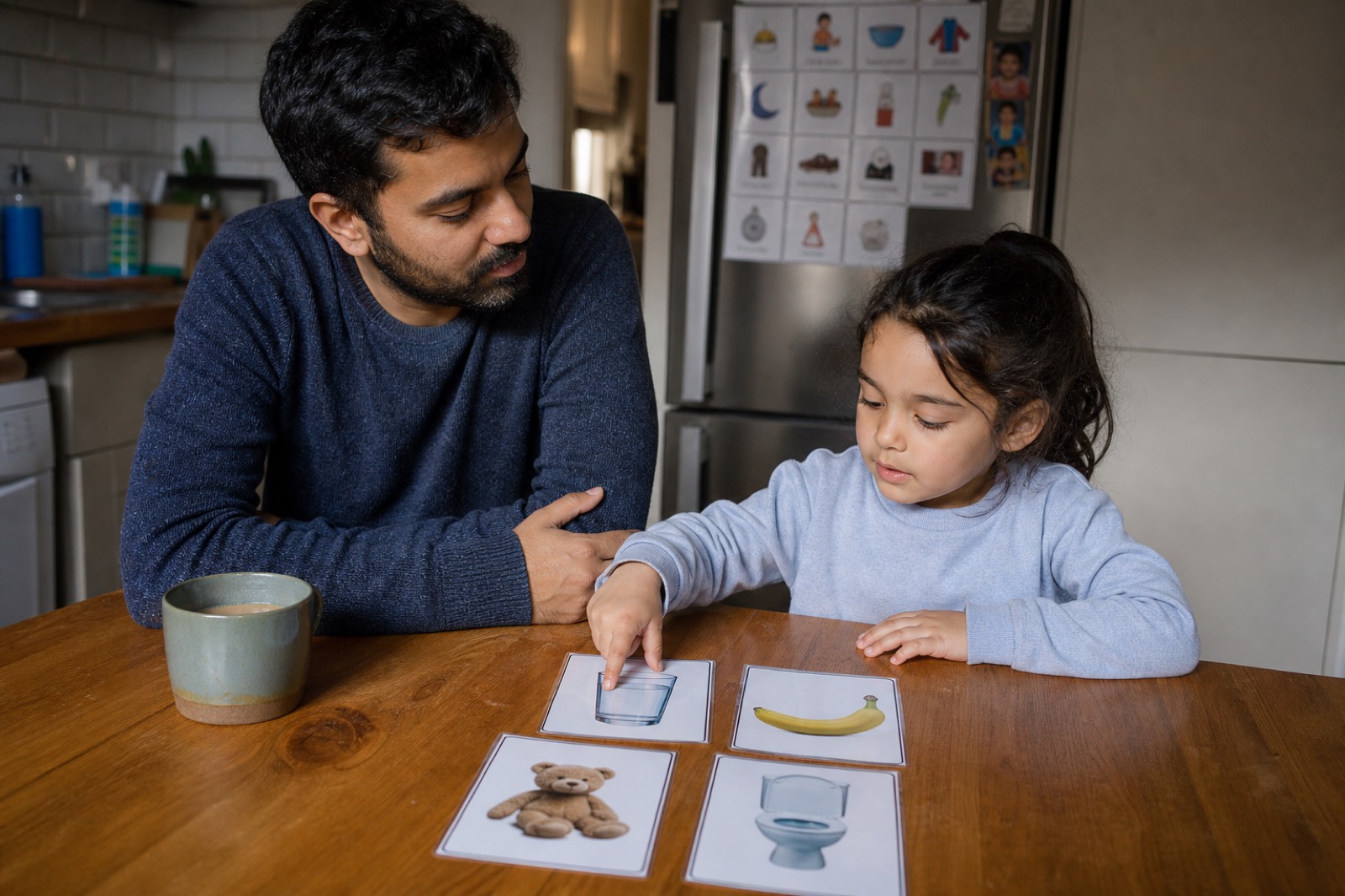
What you can do today
- Reframe the goal: support for specific needs and strengths, not 'fixing' your child.
- Note your child's priorities (communication? sensory? daily skills?) to guide what helps.
- Ask any provider how they involve the child, measure progress, and avoid distress.
- Be wary of expensive 'cures', restrictive diets or supplements with big promises.
- Use free home supports (visual schedules, communication cards) alongside any therapy.
Is there a treatment that removes autism?
No, and none is needed. Support is for specific goals: communication, sensory daily life, skills. Speech and language therapy and occupational therapy are the widely accepted starting points. Be very cautious of anything that promises to reverse autism.
First, the most important reframe: autism is not an illness to be cured. It's a lifelong difference in how a person experiences the world. So the question isn't "what treatment cures it?" but "what support helps my child communicate, learn, cope and thrive — as themselves?"
Good support is respectful, child-led and strengths-based. It targets specific goals your child and family care about, and it never aims to make a child 'less autistic' or to hide who they are. Keep that lens as you weigh up any option.
Speech therapy and occupational therapy
Two supports are widely recommended and broadly accepted:
- Speech and language therapy (SLT) helps with communication — understanding language, spoken words, and alternative methods like signs, picture cards and AAC devices. SLT supports all communication, including for children who don't speak (see nonverbal autism).
- Occupational therapy (OT) helps with sensory needs, motor skills, daily-living skills (dressing, eating, self-care), and self-regulation.
Both are practical, goal-based and family-friendly, and much of what they teach you can carry on at home.
Behavioural approaches — a balanced view
You'll likely hear about behavioural therapies (sometimes very intensive, common in some countries). It's worth being informed and thoughtful here:
- They aim to teach skills and reduce behaviours that are unsafe or get in the way.
- However, they are debated within the autistic community, with real concerns that some approaches encourage masking or compliance at the cost of a child's wellbeing.
- If you consider one, ask questions: Is it play-based and child-led? Does it respect 'no'? Does it build on strengths? Does it ever use punishment or push a child into distress?
Favour neurodiversity-affirming, gentle, child-led support, prioritise your child's wellbeing and consent, and walk away from anything distressing.
Choosing support — and what to avoid
Questions to ask any provider:
- What are the goals, and who chose them?
- How do you involve and respect my child?
- How do you measure progress, and what if it isn't working?
- How do you avoid causing distress?
Be cautious of: anyone promising a cure or 'recovery', expensive unproven programmes, and restrictive diets, supplements or 'detox' treatments, some of which are useless and a few genuinely unsafe. Always check big claims with your doctor.
Finally, remember the powerful, free support you can give at home — predictable routines, visual schedules, communication tools and understanding — works alongside any therapy.
How do I choose an autism therapy without getting sold a cure?
Choose support that helps your child communicate, participate and feel safe — and walk away from anyone who promises to make them non-autistic. Speech and language therapy, occupational therapy and parent-mediated support have clearer roles than a branded 'fix'. Ask what a session looks like, how progress is measured, and whether your child can opt out of distress.
A useful question: would this still make sense if we assume autism is lifelong? If the selling point is 'recovery', skip it. Pair therapy with home tools: cards, schedules. Who this is for: parents comparing options. Who should skip this: anyone looking for a ranking we were paid to write — we do not take those.
What should I ask a therapist before we start?
How do you involve my child? What does distress look like in your sessions, and what do you do then? How will we know this is helping in six weeks? Will you work with school? If they cannot answer without a sales pitch, walk away.
Use free home supports in parallel: cards and schedules. A therapy hour cannot replace a predictable day. For NHS-framed autism support language, see HealthAnswers on autism.
Frequently asked questions
What therapies help autistic children?
Most commonly speech and language therapy (communication) and occupational therapy (sensory, motor and daily-living skills). The right mix depends on your child's individual goals and needs.
Is there a cure or treatment for autism?
No, and none is needed — autism is a lifelong difference, not an illness. Supports help with specific goals like communication and daily skills. Be very wary of anyone selling a 'cure'.
What is the debate about ABA?
Behavioural therapies aim to teach skills, but some autistic people and families have raised concerns that certain approaches encourage masking or compliance over wellbeing. If considering one, ask whether it's child-led, respects 'no', and never causes distress.
How do I choose the right support?
Start from your child's goals, ask providers how they involve and respect your child and measure progress, and choose approaches that build on strengths without causing distress. Avoid unproven 'cures', diets and supplements.
Sources and content notes
Published by Autism Parent Guide. This is general educational information.
Clinical review involvement
General practitioner (GP) — name withheld
A general practitioner (GP), who prefers to remain anonymous, has been involved in reviewing the site since its development began and as content has been added. This describes ongoing involvement in the site. Individual article review dates and the scope of each review are not currently published.
References for this guide
- Autism in under 19s: support and managementNICE CG170
- Augmentative and alternative communication: assessment and supportASHA
- Supporting an autistic childNHS
Content updated . This date records an editorial change, not a clinical review. Read our editorial policy or report a correction.
Keep reading & doing
Not medical advice. This article is general information, not a substitute for professional assessment. Every child is different — always talk to a qualified professional about your individual child.