Autism Meltdowns: What Helps (A Calm Guide for Parents)
On this page
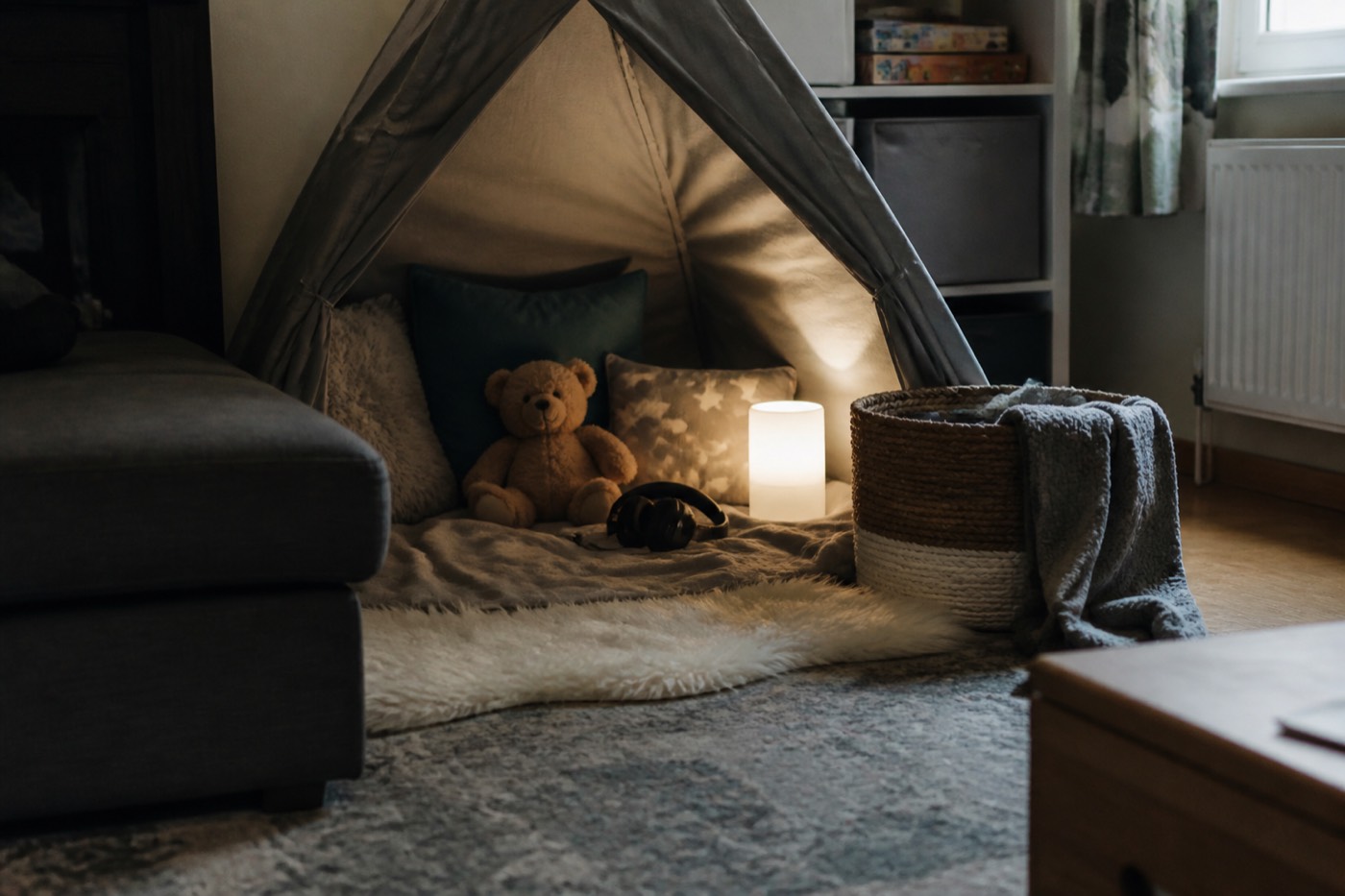
What you can do today
- Notice the early-warning signs your child shows *before* a meltdown.
- Lower the sensory load fast: less noise, dimmer light, fewer people, more space.
- Stop talking so much — use few, calm words or a picture card.
- Offer a calm-down option your child likes (quiet corner, a favourite item, deep pressure).
- Afterwards, reconnect gently — don't lecture. Look for the trigger together later.
How is a meltdown different from a tantrum?
A tantrum is often goal-driven and may stop when the goal is met. A meltdown is an overwhelmed nervous system: not a negotiation, not a choice. Reasoning, rewards and punishment make it worse. Ride it out safely, then reduce the next trigger.
It's easy to mistake a meltdown for a tantrum, but they're not the same — and treating a meltdown like a tantrum makes it worse.
- A tantrum is goal-driven. A child wants something, and the behaviour often stops when they get it (or get attention). The child usually stays aware of you and their audience.
- A meltdown is an overwhelmed response to too much input — sensory, emotional or cognitive. It is not about getting something, the child often can't stop it, and they may not be able to respond to reasoning, rewards or consequences.
Understanding this changes everything: you can't "win" a meltdown or discipline it away. You ride it out safely and prevent the next one.
What causes meltdowns
Meltdowns build up, often from a mix of:
- Sensory overload — noise, bright or flickering lights, crowds, smells, certain textures
- Too many demands — instructions, transitions, unexpected changes
- Communication frustration — not being able to express a need or be understood
- Strong emotions — anxiety, excitement, tiredness, hunger
- Build-up — a day of small stresses adding up (this is why meltdowns often hit after school, once a child is finally somewhere safe)
The child holding it together all day and melting down at home isn't being difficult with you — home is where they feel safe enough to let go. That's actually a sign of trust.
What should I do during a meltdown?
Safety, then less input: noise, light, people, questions. Few words. Stay nearby unless they need space. Offer the comfort they actually use — deep pressure or no touch. Your calm is the intervention. Teaching waits.
Keep everyone safe
Remove hazards and give space. Safety comes before everything else.
Reduce the input
Turn down or off whatever you can — noise, lights, screens, people. Less is more. A quieter, dimmer, less crowded space helps the nervous system settle.
Say less
Meltdowns aren't the time for explaining, questioning or negotiating. Use few words, a calm low voice, or a picture/visual. Lots of talking is more input to process.
Stay calm and close
Your calm is contagious. Breathe slowly, lower your shoulders, and stay near (unless your child wants space). You are the safe anchor.
Offer comfort their way
Some children want deep pressure (a firm hug, a weighted blanket); others can't bear touch and need space. Offer what your child finds soothing — and follow their cues.
What to do afterwards
After a meltdown, a child is often exhausted and may feel ashamed. This is not the moment for a lecture or consequences. Instead:
- Reconnect gently and reassure them they're safe and loved
- Let them rest and recover — meltdowns are draining
- Later, when everyone is calm, gently look at what led up to it
Keeping a simple log (what happened before, during, after) helps you spot patterns and triggers over time.
How to prevent meltdowns
You can't prevent every meltdown, but you can reduce how often they happen:
- Lower the daily sensory load — quieter spaces, ear defenders, softer lighting, breaks from busy environments.
- Make the day predictable — a visual schedule and warnings before transitions reduce anxiety.
- Support communication — give your child ways to say "help," "break," "too loud" or "all done" with picture cards before frustration peaks.
- Protect recovery time — especially after school, build in quiet downtime before any demands.
- Spot the early signs — learn your child's pre-meltdown signals and step in early with a break.
A "break" card and a calm-down space are two of the simplest, most effective tools you can set up this week.
Why does the meltdown wait until we get home?
Many children hold it together all day, then release where they feel safe. That is trust, not disrespect. Build a recovery strip after school before any demand: snack, quiet, then the rest. A 'break' card and a calm corner prevent more than a lecture.
Use the meltdown helper (works without JavaScript), cards for help/break/too loud, and a visual schedule. Log what happened before, during and after — patterns show up across a week.
Frequently asked questions
What's the difference between a meltdown and a tantrum?
A tantrum is goal-directed — the child wants something and usually stops when they get it. A meltdown is an involuntary response to being overwhelmed; it isn't about getting something and can't be reasoned or disciplined away. They need very different responses from you.
Why does my child melt down after school?
Many children hold it together all day at school, masking stress and coping with constant sensory and social demands. Once they're home and finally feel safe, it all comes out. Building in quiet recovery time straight after school often helps a lot.
Should I punish meltdowns?
No. A meltdown isn't a choice or misbehaviour, so punishment doesn't work and tends to increase anxiety and future meltdowns. Focus on safety in the moment, then on understanding and preventing triggers.
How do I calm my child during a meltdown?
Reduce the input (noise, light, people), say very little, stay calm and close, and offer the comfort your child prefers — deep pressure for some, space for others. You're helping their overwhelmed nervous system settle, not teaching a lesson.
Can communication tools reduce meltdowns?
Often, yes. A lot of meltdowns come from not being able to express a need. Giving your child cards or a device to say "help," "break" or "too loud" can head off frustration before it overwhelms them.
Sources and content notes
Published by Autism Parent Guide. This is general educational information.
Clinical review involvement
General practitioner (GP) — name withheld
A general practitioner (GP), who prefers to remain anonymous, has been involved in reviewing the site since its development began and as content has been added. This describes ongoing involvement in the site. Individual article review dates and the scope of each review are not currently published.
References for this guide
- Meltdowns: a guide for all audiencesNational Autistic Society
- Supporting an autistic childNHS
Content updated . This date records an editorial change, not a clinical review. Read our editorial policy or report a correction.
Keep reading & doing
Not medical advice. This article is general information, not a substitute for professional assessment. Every child is different — always talk to a qualified professional about your individual child.