Autism and Depression in Children: Signs and How to Help
On this page
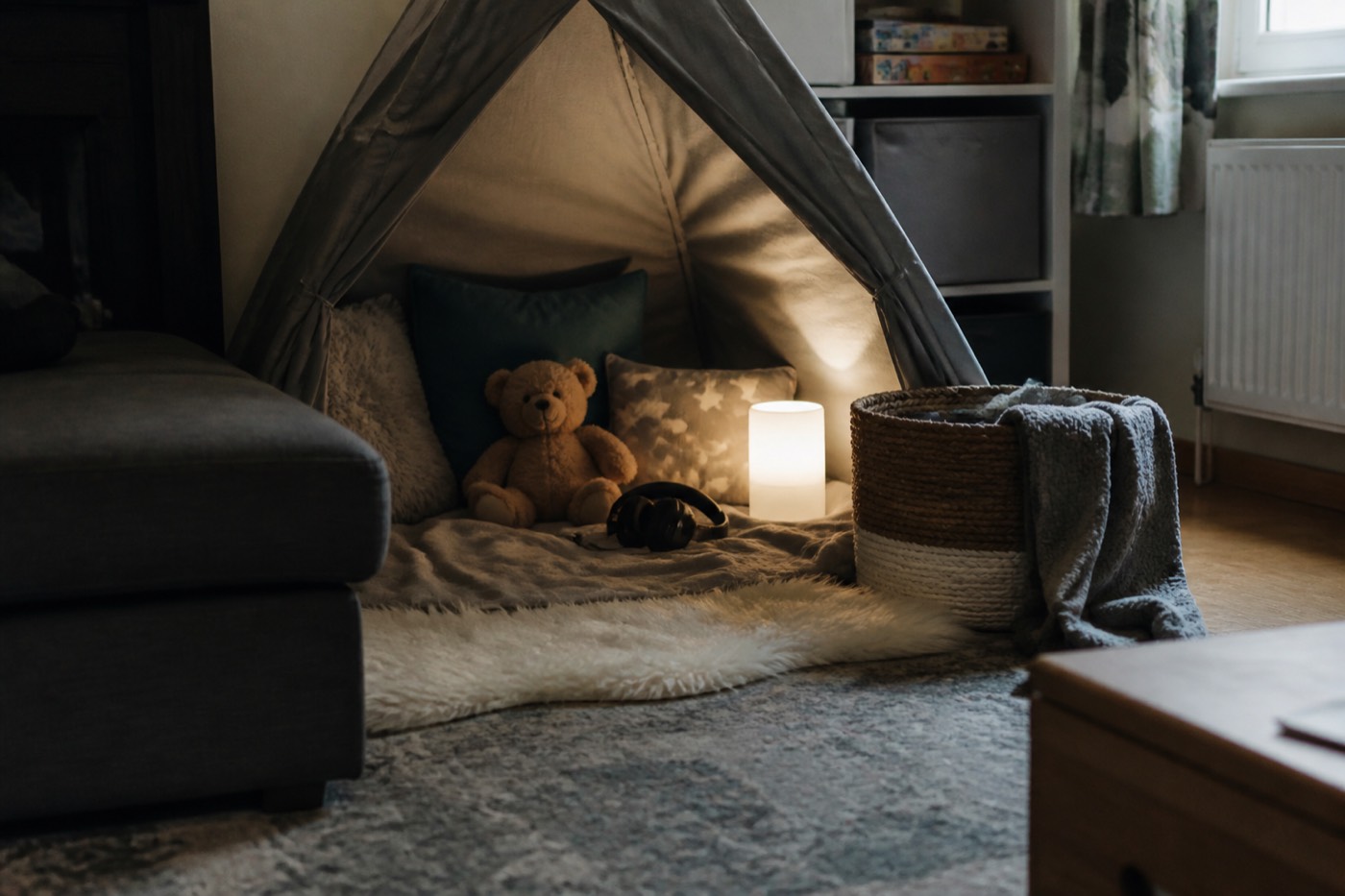
What you can do today
- Lower the pressure — cut non-essential demands and protect plenty of downtime.
- Keep gentle, low-pressure connection: be alongside them, no need to fix or interrogate.
- Give them ways to show how they feel — feelings cards, a 1–5 scale, drawing or messaging.
- Keep a light, predictable routine and build in movement and time outdoors.
- Watch for warning signs and book a GP / family-doctor appointment if low mood persists.
Why is depression more common in autistic children?
It is usually the load they carry, not autism itself: masking all day, loneliness, bullying, sensory stress and not having words for feelings. Autistic children and teenagers are at higher risk than peers. Take a change in mood or special-interest seriously, even if they do not look classically sad.
Autistic children and teenagers are at higher risk of depression than their peers. It's rarely about autism itself and much more about the weight they carry:
- Masking and exhaustion — holding it together all day and hiding distress is draining (see autistic burnout).
- Loneliness and rejection — wanting connection but finding friendships hard, or being left out.
- Bullying — autistic children are bullied more often.
- Anxiety and sensory overload — living with constant stress (see autism and anxiety).
- Feeling different and not having the words to explain how they feel.
Understanding the cause helps you respond with compassion rather than discipline.
How does depression look different in an autistic child?
It often shows as irritability, shutdowns, more meltdowns, sleep or appetite change, or losing interest in a special interest they once loved. That last change is a red flag. Do not write it off as 'just autism' or 'just behaviour' if it is new and lasting.
Depression doesn't always look like sadness. In autistic children it can show up as:
- More irritability, anger or meltdowns
- Withdrawing from people and activities
- Losing interest in a special interest they once loved (a big red flag)
- Changes in sleep or appetite
- Regression — losing skills, or needing more help than before
- More shutdowns or stimming
- Physical complaints like tummy aches or tiredness
- Talking down about themselves
Because these can be mistaken for 'behaviour' or 'just autism', it's worth gently checking in when something changes.
What actually helps at home right now?
Cut non-essential demands, stay nearby without interrogating, give a way to show feelings (cards, a 1–5 scale, drawing), and keep a light routine with daylight and movement. Validate before you problem-solve. Book a GP if low mood lasts more than a couple of weeks.
You don't need to be a therapist to make a real difference:
- Reduce demands. A struggling child has less capacity — drop what isn't essential and protect rest.
- Stay connected, low-pressure. Sit alongside them, share a special interest, or chat side-by-side (in the car, on a walk). Connection beats questioning.
- Support feelings communication. Many autistic children find it easier to show feelings than say them — use picture cards, a feelings scale, drawing or text.
- Validate, don't fix. "That sounds really hard" helps more than solutions.
- Keep gentle routine and movement. Predictability, daylight and activity all support mood.
- Look after yourself too — you can't pour from an empty cup.
When should I get professional help for low mood?
Same day if there is any talk of not wanting to be alive or self-harm. Promptly — this week — if low mood, withdrawal or lost interest lasts more than two weeks, or eating, sleep or skills drop. Ask for support adapted for autistic children, not a one-size talking-therapy script.
If low mood lasts more than a couple of weeks, or you're worried, seek professional help:
- Start with your GP / family doctor or your child's paediatric team, and tell school.
- Ask for support that is adapted for autistic children — standard talking therapy sometimes needs adjusting (more concrete language, visuals, interests, longer processing time).
- Medication is sometimes considered for older children and teens, but only under a doctor's guidance.
Getting help is a sign of good parenting, not failure. The earlier you reach out, the easier it usually is to turn things around.
Is this depression, autistic burnout, or both?
Burnout is depletion after long masking or overload; depression is a lasting low mood or loss of pleasure that is not only about being exhausted. They overlap. If rest, fewer demands and a quieter environment do not lift the fog after a couple of weeks, treat it as possible depression and ask a professional — do not wait for a perfect label.
Parents often land on this page after reading autistic burnout. Use both ideas; do not pick one to avoid getting help.
| What you notice | More like burnout | More like depression |
|---|---|---|
| Trigger | Long overload, school term, social masking | Can start without a clear crash |
| Interest in special interests | Reduced because they have no energy | Lost interest, or the interest feels empty |
| What helps first | Rest, fewer demands, sensory recovery | Connection, adapted therapy, sometimes medicine for older children |
| Time course | Often lifts when the load lifts | Lasts weeks even when life is quieter |
Write three dated examples for the GP: what changed, how long, and whether rest helped. That is more useful than arguing about the name. For UK crisis numbers and adult mental-health pathways (not a children's CAMHS form), see HealthAnswers mental health.
What should I not do if I think my child is depressed?
Do not tell them to snap out of it, take away the special interest as a punishment, force socialising as a cure, or wait for them to 'ask for help' in full sentences. Do not use an adult NHS Talking Therapies self-referral as the main path for a child. Do not delay urgent care because you are still reading.
Common traps: treating irritability as naughtiness; stacking extra clubs 'to cheer them up'; stopping the one activity that still regulates them; and searching for a parent-blame story. Depression in autistic children is treatable. The job this week is safety, lower load, a feelings channel, and a named professional — GP, paediatric team, or school mental-health lead. If you need a physical-symptom check (not eating, sleeping, unexplained pain), the children's health hub on HealthAnswers is for urgency matching, not for diagnosing mood.
What should I say to the GP about my child's low mood?
Lead with safety, then change from baseline, then duration. Example: they have not wanted their special interest for three weeks, sleep has collapsed, they said life is pointless on Tuesday. Ask what the local children and young people's mental health route is. Do not use an adult Talking Therapies self-referral as the main path for a child.
Take dated notes. Say whether they can still be kept safe at home. Ask school to write what they see. For UK crisis lines (999, 111, Samaritans 116 123, SHOUT 85258, Childline 0800 1111) see HealthAnswers mental health — those lines are for anyone struggling, not a diagnosis. A feelings 1–5 sheet can help some children show a number when words fail; it is not a depression score.
Frequently asked questions
Can autistic children get depressed?
Yes — autistic children and teenagers are actually more likely to experience depression than other children. It's important to take low mood seriously and seek help, because depression is treatable.
How is depression different in autistic children?
It can look like irritability, withdrawal, more meltdowns or shutdowns, or losing interest in a special interest, rather than obvious sadness. Changes in sleep, appetite or skills can also be signs.
What should I do if my autistic child talks about self-harm?
Treat it as urgent. Stay calm and take it seriously, keep them safe, and get help the same day — your doctor, an urgent mental-health service, or emergency services if they're in immediate danger.
Can talking therapy help autistic children?
It can, but it often works best when adapted for autistic thinking — more concrete language, visuals, the child's interests, and extra processing time. Ask whether a therapist has experience with autistic children.
Should I take away screens if my autistic teenager seems depressed?
Do not use a sudden total ban as the first move — for some autistic teens a game or fandom is the last intact interest and a way to stay connected. Reduce late-night use, keep the device out of the bedroom if sleep has collapsed, and ask what the screen is doing for them (escape, friends, special interest) before you cut it.
Sources and content notes
Published by Autism Parent Guide. This is general educational information.
Clinical review involvement
General practitioner (GP) — name withheld
A general practitioner (GP), who prefers to remain anonymous, has been involved in reviewing the site since its development began and as content has been added. This describes ongoing involvement in the site. Individual article review dates and the scope of each review are not currently published.
References for this guide
- Depression in children and young peopleNHS
- DepressionNational Autistic Society
Content updated . This date records an editorial change, not a clinical review. Read our editorial policy or report a correction.
Keep reading & doing
Not medical advice. This article is general information, not a substitute for professional assessment. Every child is different — always talk to a qualified professional about your individual child.