Autistic Burnout in Children: Signs, Causes and Recovery
On this page
What you can do today
- Cut today's demands right down — cancel anything non-essential and lower your expectations.
- Protect rest and quiet downtime, and let your child *do nothing* without it being a problem.
- Let them unmask: stimming, comfort items, favourite repetitive activities are all fine.
- Lower the sensory load — less noise, dimmer light, fewer people, more space.
- Drop skill-building and "practice" for now; recovery comes before progress.
- Note when this started and what's been piling up — it helps you ease the pressure that caused it.
What autistic burnout is
Autistic burnout is what happens when the everyday load on an autistic child runs past what their body and mind can keep up with — and stays there, day after day, without enough chance to recover.
That load is usually a mix of:
- Masking — the constant effort of hiding autistic traits to fit in at school or in public
- Sensory demands — coping with noise, light, crowds and other sensory input all day
- Social and academic pressure — following unspoken rules, managing relationships, keeping up with work
- Too little recovery — busy schedules, back-to-back activities, no real downtime
When this carries on for weeks, months or years, the tank empties. Burnout is the result. It is not the same as ordinary tiredness, which lifts after a good night's sleep or a relaxing weekend. Burnout doesn't lift like that — a child can sleep for hours and still wake up depleted.
The term comes largely from autistic adults describing their own lives, and it's now increasingly recognised by clinicians and autism charities. Children experience it too, even though they may not have the words to explain what's happening to them.
Signs of burnout in children
Burnout can look different from child to child, but some patterns come up again and again. You might notice:
- Exhaustion that doesn't lift — tiredness that stays even after sleep and rest
- Loss of skills they used to have — speech becoming harder or stopping, struggling with self-care they'd mastered, no longer coping with things they used to manage
- More meltdowns and shutdowns — a shorter fuse, or going quiet and unresponsive
- Heightened sensory sensitivity — sounds, lights or textures that were tolerable suddenly feel unbearable
- Withdrawal — pulling away from people, dropping favourite interests, wanting to be alone
- School avoidance — being unable to face school, often with tummy aches or morning distress
- Irritability or flatness — snappy and overwhelmed, or strangely switched-off and "not themselves"
The skill loss is often the most frightening part for parents — watching a child who chatted happily go quiet, or stop dressing themselves. It helps to know that regression in burnout is usually temporary. The skills haven't vanished; the child simply doesn't have the energy to use them right now. As they recover, the skills tend to come back.
Burnout vs depression vs regression
These three can overlap and be hard to tell apart — but they call for different responses, so it's worth understanding the differences.
Autistic burnout
Burnout is driven by exhaustion and overload. The clearest sign is that it eases when you reduce demands and protect rest. Energy and skills gradually return once the pressure comes off. If lowering the load helps, you're likely dealing with burnout.
Depression
Depression is a persistent low mood, loss of pleasure and hopelessness that doesn't lift just because the week got quieter. It can co-occur with burnout, and the two can feed each other. If low mood, tearfulness or withdrawal lasts for weeks despite rest — or if your child seems hopeless or talks about not wanting to be here — this needs professional help. Speak to your GP or your child's specialist team.
Developmental regression
This is the loss of skills a child has reached as part of their development — and it is different again. A sudden or unexplained loss of skills, especially speech or movement in a younger child, should always be checked by a doctor first. Some causes are medical and need ruling out before anyone assumes burnout.
When in doubt, see a doctor. You don't have to work out which one it is on your own — that's exactly what professionals are there for.
Helping your child recover
Recovery from burnout follows one core principle: take the pressure off and let your child refill the tank. This can feel counter-intuitive when you're worried about lost skills — but pushing harder makes burnout worse, not better.
Reduce demands, drastically
Strip the week back to essentials. Cancel optional activities, lower your expectations, and let go of anything that can wait. Less to cope with means more energy to recover.
Protect rest and downtime
Guard quiet, unstructured time fiercely. "Doing nothing" — lying down, watching the same show, being left alone — is genuine recovery, not laziness. A visual schedule can help you build rest into the day on purpose.
Let them unmask
Home should be the place your child doesn't have to perform. Let them stim freely, use comfort items, and lean on favourite repetitive activities. Dropping the mask is part of how they recharge.
Lower the sensory load
Dim the lights, turn down the noise, reduce crowds and clutter. A calmer environment asks less of an already-overwhelmed nervous system.
Pause or reduce school if needed
If school is a major part of the overload, a reduced timetable or a short break — worked out with the school — can be what makes recovery possible. This is a bridge, not a failure.
Be patient as skills return
Skills usually come back gradually as energy returns. Don't test or drill them. Offer warmth, low-pressure comfort and the things your child loves, and let recovery happen at its own pace.
Preventing burnout
You can't remove every source of stress, but you can stop the load from quietly building to breaking point again. The long game is about lightening the everyday burden and protecting recovery.
- Reduce chronic masking — the less your child has to hide who they are, the less it costs them. Push for accepting, autism-friendly environments at home and school so masking isn't constantly needed.
- Build recovery into normal life — regular downtime, decompression after school, and genuinely restful weekends, not just packed ones.
- Watch the total load — add up school, homework, clubs, therapies and social demands together. A child can be coping with each one but drowning in the sum.
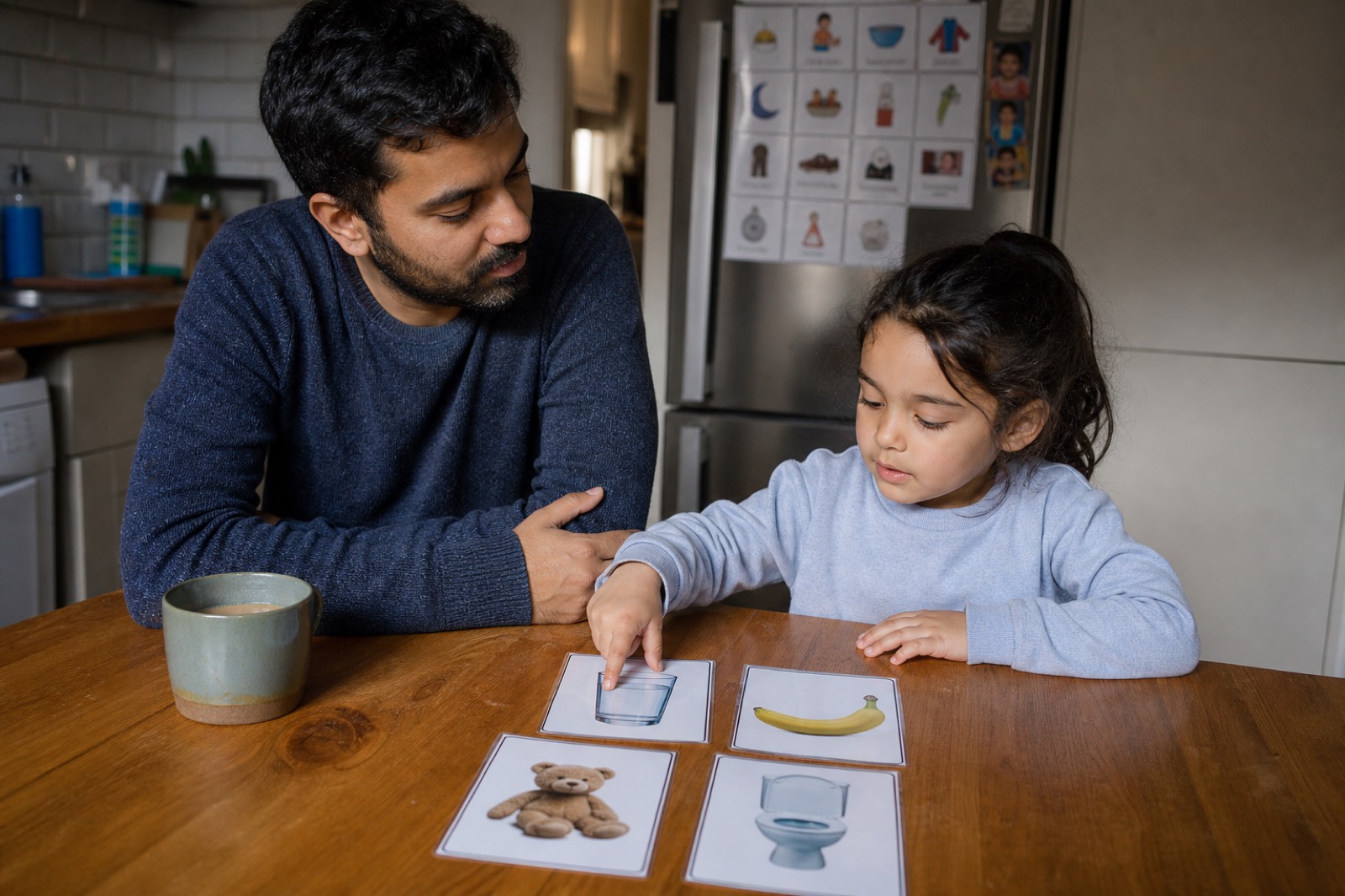
- Meet sensory and communication needs — reducing sensory overload and giving your child reliable ways to express needs lowers the daily strain. Communication cards can help a child signal "I need a break" before they reach empty.
- Advocate for adjustments — work with school on reasonable changes (quiet spaces, a key adult, flexible expectations) so the day is sustainable.
Burnout is your child's signal that their life is asking more than they can give. Easing that load isn't about lowering hopes for your child — it's about making sure they have the energy to thrive.
Frequently asked questions
What is autistic burnout?
Autistic burnout is a deep, lasting exhaustion — physical, mental and emotional — that builds up when the demands on an autistic child go beyond what they can manage, often after long periods of masking, sensory strain and pressure with too little recovery. It can bring temporary skill loss, more sensory sensitivity, withdrawal and more meltdowns or shutdowns. It is not the same as ordinary tiredness and doesn't lift with a single good night's sleep.
Why has my child suddenly lost skills they used to have?
In burnout, a child often loses skills like speech, self-care or coping not because the skills have gone, but because they no longer have the energy to use them. This kind of regression is usually temporary and tends to return as your child recovers. That said, a sudden or unexplained loss of skills — especially speech or movement in a young child — should always be checked by a doctor first to rule out other causes.
Is autistic burnout the same as depression?
No, though they can overlap and look similar. Burnout is driven by exhaustion and overload, and it eases when you reduce demands and protect rest. Depression is a persistent low mood that doesn't lift just because life gets quieter. If low mood, withdrawal or hopelessness lasts for weeks despite rest — or if your child talks about not wanting to be here — speak to a doctor, because that may be depression and needs professional support.
How long does autistic burnout last?
There's no fixed timeline — it depends on how long the overload built up and how much you can ease the pressure. Some children bounce back within days or weeks once demands drop and rest is protected; deeper burnout can take much longer. The key is patience: recovery happens at its own pace, and pushing your child to "snap out of it" tends to extend it.
How can I help my child recover from burnout?
Take the pressure off and let them refill the tank. Drastically reduce demands, protect plenty of rest and quiet downtime, let them unmask and stim freely, lower the sensory load, and pause or reduce school if it's a major source of strain. Avoid skill-building or drilling during this time — comfort and recovery come first. Skills usually return gradually as energy comes back.
Can I prevent autistic burnout?
You can't remove all stress, but you can stop it building to breaking point. Reduce how much your child has to mask by pushing for accepting environments, build regular recovery into daily life, and watch the total load across school, home and activities — each may be manageable alone but overwhelming together. Meeting sensory and communication needs and securing adjustments at school all help keep the demands sustainable.
Sources and content notes
Published by Autism Parent Guide. This is general educational information.
Clinical review involvement
General practitioner (GP) — name withheld
A general practitioner (GP), who prefers to remain anonymous, has been involved in reviewing the site since its development began and as content has been added. This describes ongoing involvement in the site. Individual article review dates and the scope of each review are not currently published.
References for this guide
- Autistic fatigueNational Autistic Society
- MaskingNational Autistic Society
Content updated . This date records an editorial change, not a clinical review. Read our editorial policy or report a correction.
Keep reading & doing
Not medical advice. This article is general information, not a substitute for professional assessment. Every child is different — always talk to a qualified professional about your individual child.