Autism Levels Explained: Level 1, 2 and 3 (and 'High Functioning' and Asperger's)
On this page
What you can do today
- Look at the *whole* report, not just the level — the recommendations matter far more than the number.
- Write down where your child copes well and where they struggle most — needs shift by setting.
- Note any place your child seems "fine" but may be masking and crashing later at home.
- Reframe the label for yourself: it describes support needs today, not a ceiling on your child.
- Pick one practical support to start — predictability and communication help at every level.
What autism levels 1, 2 and 3 mean
The three "levels" come from the DSM-5, the manual many clinicians use to describe autism. They were designed to capture one thing: how much day-to-day support a person needs to manage. They are not a score for intelligence, language ability, or how much your child will achieve in life.
Clinicians look at two areas separately and may give a different level for each:
- Social communication — understanding and using back-and-forth conversation, gestures, facial expressions, and social cues.
- Restricted and repetitive behaviours — including a strong need for sameness, intense interests, sensory sensitivities, and difficulty coping with change.
Here's what each level points to:
- Level 1 — "requiring support." A child may manage in familiar settings but struggle to start conversations, cope with change, or stay organised. Without support, difficulties become more obvious.
- Level 2 — "requiring substantial support." Differences are clear even with support in place. Communication may be more limited, and changes or unexpected demands cause noticeable distress.
- Level 3 — "requiring very substantial support." A child needs a lot of help with daily life. Communication may be very limited or non-speaking, and small changes can be extremely hard to manage.
Remember: a level describes the support a child needs in context — it says nothing about how much they understand, how loved they are, or what their future holds.
Why levels aren't fixed
One of the most important things to know is that a level is a snapshot, not a sentence. Support needs go up and down depending on what's being asked of your child and how the day is going.
- A child might look like "Level 1" at home — calm, chatty, comfortable — and need far more support at school, where noise, social demands, and unpredictability pile up.
- The same child can have a brilliant day and a hard day. Tiredness, hunger, anxiety, illness, or a change of routine can all raise the level of support they need in the moment.
- Many autistic children, especially those who mask their differences, look like they're coping when they're actually working incredibly hard to hold it together — and then melt down once they're somewhere safe.
This is why a level should never be treated as a permanent verdict. Your child isn't "a Level 2" — they're a whole person whose support needs flex with their environment. A good support plan responds to the child in front of you on the day, not the number on a form from last year.
What 'high functioning autism' really means
You'll hear "high functioning autism" everywhere, but it's worth knowing: it isn't an official diagnosis. It's an informal phrase, and many autistic people find it unhelpful — even hurtful.
Usually people use it to mean an autistic child who speaks fluently or doesn't have an intellectual disability. The problem is that it paints a misleading picture:
- It can hide very real struggles — exhausting masking, constant anxiety, sensory overload, and difficulty with everyday tasks that others assume should be easy.
- It can lead to support being refused, because a child "seems fine." Looking able and being able to cope are not the same thing.
- Its mirror term, "low functioning," is just as unhelpful — it can cause people to underestimate a child and overlook their strengths, understanding, and potential.
A far more useful approach is to describe what your child can do and what they actually need help with. "She's a confident reader but finds noisy places overwhelming and needs warning before changes" tells a teacher far more than any label. Focus on specific strengths and specific support needs rather than a single sticky word.
Is Asperger's the same as autism?
If you've come across "Asperger's," you're not behind the times — the terminology genuinely changed.
- Asperger's syndrome used to be a separate diagnosis, generally given to autistic people with fluent speech and no intellectual disability.
- In 2013, the DSM-5 folded Asperger's, alongside several other separate diagnoses, into one umbrella: autism spectrum disorder (ASD). The idea was that these are all part of the same spectrum, just with different profiles and support needs.
- So today, a child who might once have been diagnosed with Asperger's would usually be diagnosed as autistic — often described as Level 1.
This is why you'll meet people, especially older teens and adults diagnosed before the change, who still call themselves "Aspies" or say they "have Asperger's." That's completely valid — it's their identity and their history. You may also notice the name itself is now controversial because of who it was named after, which is part of why many people have moved away from it.
If your child's older report says one thing and a newer one says another, you're not seeing a mistake — just two points along a shift in how autism is described. The child is the same; the words around them have caught up.
Which words to use and what really matters
Labels can open doors — they help unlock support, services, and understanding. But once you're through the door, the label matters far less than knowing your individual child.
Lead with strengths and specific needs
Instead of "mild" or "severe," describe what's actually going on. "He's amazing with anything mechanical, finds group instructions hard to follow, and needs a quiet space when overwhelmed" is concrete and genuinely useful to a teacher or therapist.
Use respectful, affirming language
There's no single "right" way, and families vary, but a good rule is to follow how autistic people describe themselves. Many prefer identity-first language ("autistic child"); others prefer "child with autism." Both are used with care throughout this guide. The goal is acceptance and understanding, not fixing or curing your child — autism is part of who they are.
Focus on what helps, at every level
Whatever the number on the report, the same practical supports tend to help:
- Predictability — a visual schedule and warning before changes reduce anxiety.
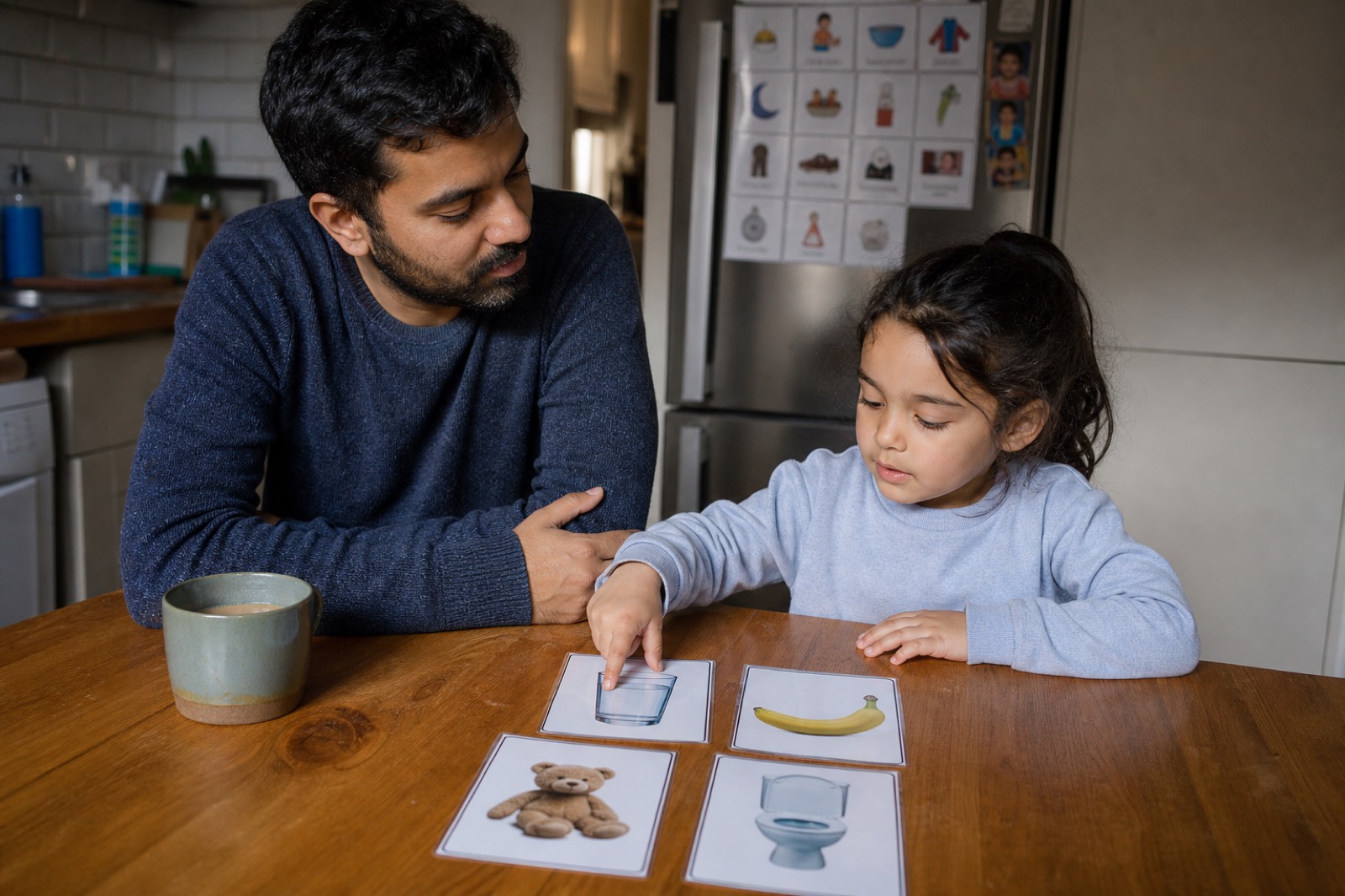
- Communication — give your child reliable ways to express needs, including picture communication cards for those who find speech hard.
- Lower sensory and demand load — small adjustments prevent overwhelm before it builds.
If you're still finding your feet after a recent diagnosis, our guide to what to do after diagnosis walks you through the next practical steps. The level is a starting point for getting help — your knowledge of your own child is what makes that help work.
Frequently asked questions
What do autism levels 1, 2 and 3 mean?
They come from the DSM-5 and describe how much support a person needs: Level 1 means requiring support, Level 2 requiring substantial support, and Level 3 requiring very substantial support. Clinicians may give a different level for social communication and for repetitive behaviours. The levels measure support needs in context, not intelligence, worth, or potential.
Is a higher autism level worse?
No. A higher level simply means a child needs more support to manage daily life — it doesn't make autism "worse" or say anything about how much your child understands, achieves, or is loved. Every autistic child has strengths. The level is there to help match the right support, not to rank children.
What does 'high functioning autism' mean?
It's an informal phrase, not an official diagnosis, usually used for autistic people who speak fluently or don't have an intellectual disability. Many autistic people dislike it because it hides real struggles like anxiety, sensory difficulties and exhausting masking, and can lead to support being refused. It's more helpful to describe a child's actual strengths and support needs.
Is Asperger's the same as autism now?
Yes. Asperger's syndrome was a separate diagnosis that was merged into autism spectrum disorder in the DSM-5 in 2013. A child once diagnosed with Asperger's would usually now be diagnosed as autistic, often described as Level 1. People diagnosed before the change may still use the older term, which is completely valid.
Can my child's autism level change over time?
A level is a snapshot, not a fixed verdict. Support needs go up and down with the environment, the day, stress, and demands — a child may look "Level 1" at home and need much more support at school. Masking can also hide real needs. Treat the level as a guide to support today, not a permanent label.
Can autism be mild?
"Mild" can be misleading. A child whose difficulties aren't obvious to others may still be working extremely hard to cope, masking all day and struggling with anxiety or sensory overload underneath. Rather than "mild" or "severe," it's clearer and kinder to describe what your child finds easy and where they genuinely need help.
Sources and content notes
Published by Autism Parent Guide. This is general educational information.
Clinical review involvement
General practitioner (GP) — name withheld
A general practitioner (GP), who prefers to remain anonymous, has been involved in reviewing the site since its development began and as content has been added. This describes ongoing involvement in the site. Individual article review dates and the scope of each review are not currently published.
References for this guide
Content updated . This date records an editorial change, not a clinical review. Read our editorial policy or report a correction.
Keep reading & doing
Not medical advice. This article is general information, not a substitute for professional assessment. Every child is different — always talk to a qualified professional about your individual child.