Autistic Child Won't Sleep? A Calm Guide to Autism and Sleep Problems
On this page
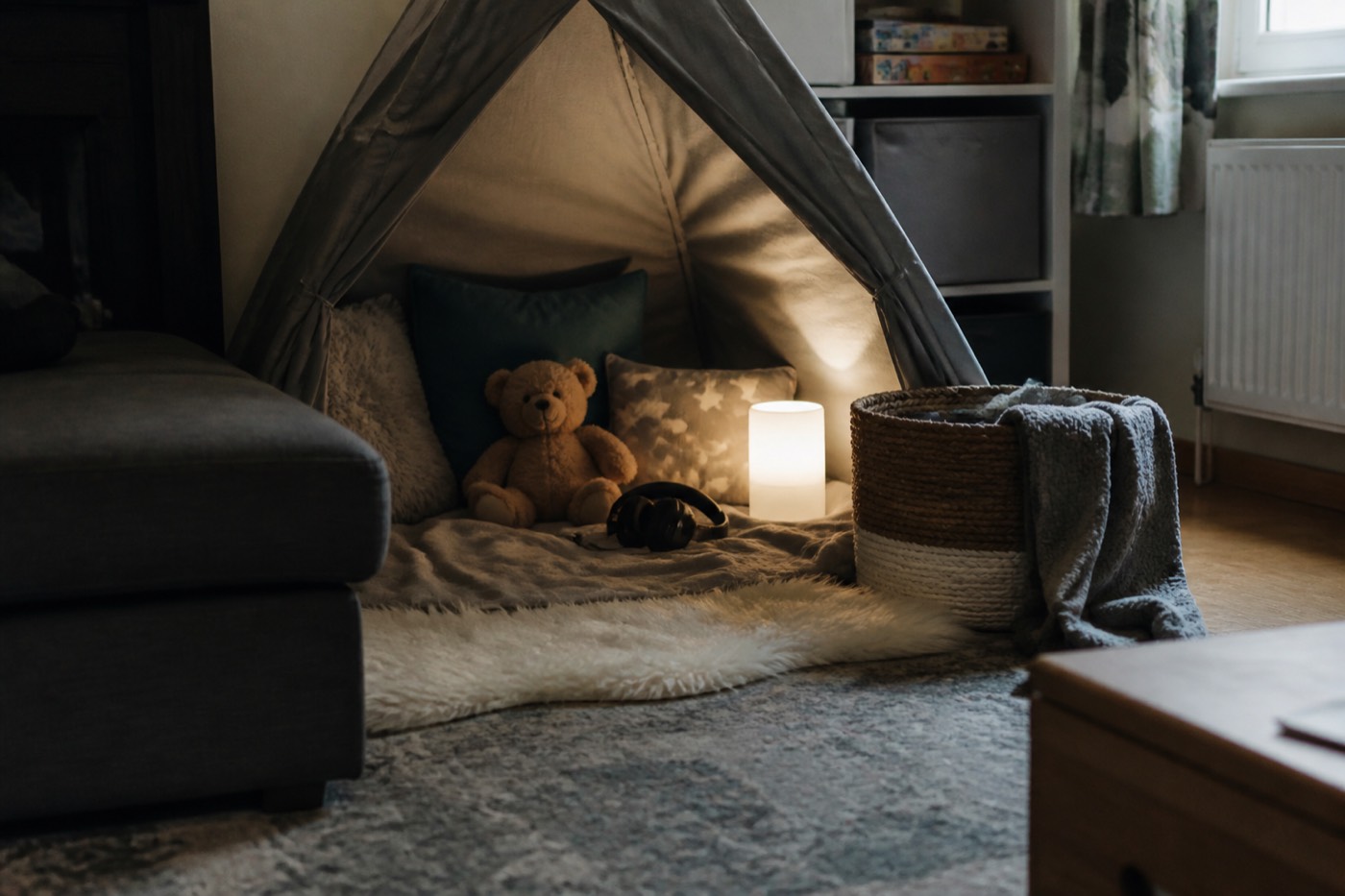
What you can do today
- Set one fixed wake-up time and stick to it every day, including weekends.
- Start a calm 60–90 minute wind-down: dim the lights and turn off screens.
- Build a short, same-every-night bedtime sequence (e.g. bath, pyjamas, teeth, story, lights out).
- Make the bedroom dark, cool and quiet — try blackout blinds and white noise.
- Open the curtains for bright daylight first thing in the morning to anchor the body clock.
- Start a simple sleep diary so you can spot patterns and what helps.
Why autistic children often struggle with sleep
Sleep problems are one of the most common challenges families face — studies suggest the majority of autistic children have trouble falling or staying asleep at some point. This isn't a discipline problem or a sign you're doing something wrong. For most children, the reasons are biological and very understandable.
What tends to be going on
- Anxiety at the quietest moment. Bedtime is unstructured, dark and still — exactly the conditions where worried thoughts surface. For an anxious child, lying alone in the dark can feel like the hardest part of the day.
- Sensory sensitivity. A ticking clock, a streetlight through the curtains, a scratchy seam, the texture of a duvet, or a too-warm room can all keep a sensitive nervous system on alert. What feels minor to you may be impossible to switch off for your child. See sensory overload for more.
- Body-clock differences. Many autistic children produce the sleep hormone melatonin at different times or amounts, so their internal clock doesn't line up with the household's. Their body genuinely may not feel sleepy at 8pm.
- Co-occurring conditions. ADHD, tummy discomfort, reflux, constipation and restless legs are all more common and can all disrupt sleep.
- A strong need for predictability. Without a clear, familiar route into sleep, the transition itself can feel uncertain and unsettling.
Knowing the cause matters, because it points you to the right fix — calming a body clock, dialling down sensory input, or easing anxiety, rather than simply pushing harder at bedtime.
Building a predictable bedtime routine
Predictability is one of your most powerful tools. When the steps into sleep are the same every night, your child's body learns to wind down on cue, and the uncertainty that fuels resistance fades.
Keep it the same — same order, same time
Pick a short, manageable sequence and run it in the same order each night: for example bath, pyjamas, teeth, story, lights out. Aim for the same bedtime within about 15–30 minutes each night. The exact steps matter less than the consistency.
Make the routine visual
A picture sequence shows your child exactly what's coming and what's left to do, which removes a lot of bedtime anxiety and negotiation. A visual schedule for bedtime — or a simple timer to signal the "last activity" — makes the order feel safe and clear rather than open-ended.
Wind down for 60–90 minutes
Sleep doesn't switch on instantly. In the hour or so before bed, lower the energy in the home: dim the lights, soften your voice, and switch to calm activities like reading, drawing, gentle puzzles, a warm bath, or quiet music. Avoid rough-and-tumble play, exciting screens, and big conversations right before bed.
Protect a consistent wake-up time
This one is quietly essential. Getting up at the same time every day — yes, including weekends and holidays — is what keeps the body clock steady. A consistent morning is often what eventually fixes a difficult bedtime.
Making the bedroom sensory-friendly
For a sensitive child, the bedroom environment can be the difference between drifting off and lying awake. Small changes here often have an outsized effect.
Things worth trying
- Darkness. Blackout blinds or curtains block streetlights and early dawn — darkness is a strong signal to the body that it's time to sleep.
- Sound. Some children settle best in near silence; others do better with steady white noise or a quiet fan to mask sudden sounds. Try both.
- Bedding and clothing. Look for seam-free or tagless pyjamas and bedding in textures your child likes. Cut out scratchy labels and avoid fabrics they find irritating.
- Temperature. A slightly cool room (rather than warm) helps most people sleep. Check they're not overheating.
- Declutter the view. Remove bright, busy or visually exciting items from where your child lies — a calm, plain field of view is easier to settle in.
- Comfort objects. A favourite soft toy, blanket or pillow can make the bed feel safe and familiar.
Weighted blankets — with care
Some families find a weighted blanket's deep, even pressure calming at bedtime. If you try one, follow the maker's guidance carefully: a child must be able to move out from under it on their own, and weighted blankets are not safe for babies, toddlers, or any child who can't reposition themselves independently. Check with your doctor or an occupational therapist if you're unsure.
Expect some trial and error. Keeping a short sensory diary — what you changed and how the night went — helps you find your child's particular recipe for sleep.
Screens, light and the body clock
Light is the single biggest signal that sets the body clock — and evening screens send the wrong one. Bright, blue-rich light from phones, tablets, TVs and game consoles tells the brain it's still daytime and pushes back the release of melatonin. For a child whose melatonin timing is already different, this can tip a hard bedtime into an impossible one.
What helps
- Set a screen cut-off. Switch off screens at least 60 minutes before bed — earlier if you can. Make the cut-off part of the visual routine so it's expected, not a surprise battle.
- Dim the evening. Lower the lights around the home in the last hour or two. Warm, low lighting nudges the body toward sleep; bright overhead lights work against it.
- Chase the morning light. Bright daylight first thing in the morning is a powerful anchor for the body clock. Open the curtains wide, or get outside for a few minutes after waking.
- Replace, don't just remove. Taking screens away is far easier when there's a calming alternative ready — a story, audiobook, colouring, or quiet time with you. Offer the swap rather than leaving a gap.
Think of light as medicine with timing: bright in the morning, dim in the evening, dark at night.
Night waking and early waking
When your child wakes in the night
The goal overnight is to keep things calm, dim and frankly a little boring — anything stimulating teaches the brain that night-time is interesting. Keep lights low, your voice quiet, and conversation to a minimum. Settle your child and guide them back to bed with the same gentle, low-key approach each time, so the response is predictable.
Also check for a physical cause behind repeated waking: hunger, thirst, needing the toilet, feeling too hot or cold, or discomfort from reflux or constipation. If a particular wake-up keeps happening, the sleep diary will usually reveal the pattern.
When your child wakes too early
Early waking is exhausting but often improvable.
- Shift gradually. If you want a later wake-up, move bedtime and the morning routine in small 10–15 minute steps over several days rather than all at once.
- Keep the room dark. Blackout blinds stop the dawn from acting as an alarm clock.
- Use an "okay to wake" cue. A simple clock or light that changes colour at the agreed time gives a clear, visual signal for when it's morning — much easier to follow than "stay in bed."
- Have a quiet-activity basket ready. Books, soft toys or calm activities by the bed give an early riser something safe to do without needing to get the whole house up.
Safety for children who wake and wander
If your child gets up and roams while others sleep, think about safety: a working stair gate, a securely locked front door with the key out of reach, blocked access to stairs or the kitchen, and removing hazards from their room. Many families find a door or bed sensor or monitor gives peace of mind. If wandering at night is a regular worry, raise it with your doctor or specialist team.
Melatonin and when to talk to a doctor
Melatonin is sometimes used to help autistic children fall asleep, and for some it makes a real difference. But it is not a first step or a substitute for the basics — and it should only ever be started with medical guidance.
What to know about melatonin
- Behavioural changes come first. A consistent routine, a dark and calm room, no evening screens, and a fixed wake-up time are the foundation. Melatonin works best alongside these, not instead of them.
- Only with a doctor. Dose and timing both matter — given at the wrong time it can be unhelpful or even shift the body clock the wrong way. Don't buy it online or start it on your own. In many countries it is prescription-only for children for exactly this reason.
- It's usually for sleep onset. Melatonin tends to help children fall asleep rather than stay asleep all night.
Red flags to raise with your doctor
Make an appointment if your child:
- Snores loudly, gasps, chokes, or seems to stop breathing during sleep — these can signal sleep apnoea, which is treatable.
- Seems to be in pain at night, or has reflux, tummy ache or constipation disrupting sleep.
- Is extremely tired or unwell during the day despite spending enough time in bed.
- Has sleep problems that don't improve after several weeks of consistent changes.
There's no "cure" for autism-related sleep differences, but with the right routine, environment and — where appropriate — medical support, the great majority of children do sleep better over time. Asking for help early is a sensible, caring step.
Frequently asked questions
Why won't my autistic child fall asleep even when they're exhausted?
Tiredness and the body's readiness for sleep aren't the same thing. Many autistic children produce melatonin at a different time, so their internal clock doesn't say "sleep" even when their body is worn out. Anxiety and sensory input at bedtime can also keep the nervous system switched on. A steady routine, a dark calm room, and no evening screens help the body and clock line up.
Is melatonin safe for autistic children?
Melatonin is used for some autistic children and can help, but it should only be started with a doctor's guidance — never bought online or given on your own. The right dose and timing matter, and behavioural strategies like a consistent routine and a dark room should come first. In many countries it's prescription-only for children. Talk to your GP or paediatrician before trying it.
How do I stop my autistic child waking in the night?
Keep night-time interactions calm, dim and boring so the brain learns night isn't interesting, and return your child to bed the same gentle way each time. Check for physical causes too — hunger, the toilet, temperature, or discomfort from reflux or constipation. A sleep diary helps you spot what's behind repeated waking so you can address the actual cause.
My child wakes at 5am every day — how can I shift this?
Shift gradually: move bedtime and the morning routine in small 10–15 minute steps over several days rather than all at once. Keep the room properly dark with blackout blinds so dawn doesn't act as an alarm, and use an "okay to wake" clock or light to signal when morning starts. A quiet-activity basket by the bed gives an early riser something to do without waking the house.
Should I use a weighted blanket to help my child sleep?
Some children find the deep, even pressure of a weighted blanket calming at bedtime, but use it carefully. Your child must be able to move out from under it on their own, and weighted blankets aren't safe for babies, toddlers, or any child who can't reposition themselves. If you're unsure, check with your doctor or an occupational therapist before trying one.
How long does it take for a new bedtime routine to work?
Give it time — most families need a few weeks of consistency before they see real change, and progress is usually gradual rather than overnight. Pick your changes, keep them the same every single day including weekends, and resist switching tactics too soon. A sleep diary helps you notice the small improvements that show it's working.
Sources and content notes
Published by Autism Parent Guide. This is general educational information.
Clinical review involvement
General practitioner (GP) — name withheld
A general practitioner (GP), who prefers to remain anonymous, has been involved in reviewing the site since its development began and as content has been added. This describes ongoing involvement in the site. Individual article review dates and the scope of each review are not currently published.
References for this guide
- Sleep and autismNational Autistic Society
- Autism in under 19s: support and managementNICE CG170
Content updated . This date records an editorial change, not a clinical review. Read our editorial policy or report a correction.
Keep reading & doing
Not medical advice. This article is general information, not a substitute for professional assessment. Every child is different — always talk to a qualified professional about your individual child.