Autism and School Refusal: When Your Child Can't Attend School
On this page
What you can do today
- Reframe it in your own mind: this is anxiety and *can't*, not defiance and *won't*.
- Stop the morning battle today — lower the pressure and keep mornings calm and low-conflict.
- Write down what you notice: which days, lessons, times and places are hardest.
- Email school to ask for a meeting with the class teacher and SENCO (special-education lead).
- Pick one small, achievable step toward school and protect plenty of recovery time at home.
- Book a GP appointment if anxiety is affecting eating, sleep or mood.
What school refusal really is
The phrase "school refusal" is misleading. Most professionals now use emotionally based school avoidance (EBSA) — because for the vast majority of children, this is about anxiety they can't manage, not a choice to disobey.
EBSA vs truancy
They can look similar from the outside but they are very different:
- Truancy usually means a child is avoiding school to do something they'd rather do, often without parents knowing, and without obvious distress.
- EBSA is driven by fear and anxiety. The child is usually at home, the parents know, and there is real distress — tears, panic, pleading, or a complete shutdown.
It sits on a spectrum
EBSA isn't all-or-nothing. It can range from mild reluctance and the odd reluctant morning, through frequent lateness or asking to come home, all the way to being completely unable to walk through the school gates.
Many children also have physical symptoms — tummy aches, headaches, feeling sick, needing the toilet — that are very real, not "made up." Anxiety lives in the body, and these complaints often peak on school mornings or Sunday evenings and ease at weekends or in the holidays. That pattern is a clue, not proof your child is fine.
The single most important shift is this: your child is not choosing this. Something is making school feel unbearable, and their body is hitting the brakes.
Why autistic children struggle to attend
School is built around the very things many autistic children find hardest — noise, crowds, constant social demands, and change. When you understand what's overwhelming your child, the avoidance starts to make complete sense.
Common drivers include:
- Sensory overload — the noise and chaos of corridors, the smell and crush of the lunch hall, scratchy uniforms, fluorescent lights, fire alarms, and busy classrooms. Read more in sensory overload: signs and how to help.
- Social demands — unwritten rules, group work, friendship pressures, unstructured break times, and the constant effort of working out what others mean.
- Academic pressure or unmet learning needs — work that's too hard, too fast, or not adapted; fear of getting things wrong; or support that hasn't been put in place.
- Unpredictability and transitions — cover teachers, changes to timetable, surprise events, moving between classrooms, or no warning before something new. See coping with change and new routines.
- Bullying or feeling unsafe — often hidden, and a very common trigger. Always gently check for it.
- Masking and burnout — many autistic children hold themselves together all day by masking, then collapse at home. Over time this can tip into autistic burnout, where attending becomes impossible.
Be a detective, not a judge
There's usually more than one cause, and it's rarely the obvious one. Notice patterns: Is it a particular lesson, day, teacher or part of the building? Better at the start of the week or the end? Worse after a busy weekend? Keeping simple notes for a week or two often reveals the trigger far faster than asking your child "why" — a question they frequently can't answer.
Working in partnership with school
You and school want the same thing — your child happy and learning. The most powerful thing you can do is build a calm, blame-free partnership, even when you feel frustrated or let down.
Ask for a meeting and a plan
Email school to request a meeting with the class teacher and the SENCO (the special-education lead; called different things in different countries). Go in with your notes about triggers, and ask them to share what they see during the day — the picture at school is often very different from the one at home.
Reasonable adjustments to ask about
Schools can usually offer more than parents realise. Ideas to discuss:
- A key trusted adult your child can go to, and a safe, quiet space to use when overwhelmed
- A sensory pass or time-out card so your child can leave a situation without asking out loud
- A flexible or staggered start to avoid the busiest, loudest times
- A reduced or part-time timetable as a temporary bridge back in — not a permanent solution
- Help with unstructured times like break and lunch, where many autistic children struggle most
- Adjusting workload, giving advance notice of changes, and clear visual timetables
Get it in writing
Ask for what you agree to be written down and added to your child's support plan (an IEP, EHCP, or your region's equivalent). Set a date to review how it's going. Keep your tone collaborative — you'll need this relationship for the long haul, and children sense when the adults around them are working together.
Reducing anxiety and a graded return
Once you understand the triggers, the goal is to lower the fear and rebuild confidence in small, manageable steps. Pushing a frightened child through the gates may "work" once, but it usually deepens the dread and makes the next day harder.
Remove or reduce the triggers first
There's little point asking a child to face school while the thing overwhelming them is still there. Tackle the sensory load, the bullying, the impossible lesson, or the unpredictability before expecting progress on attendance.
Make school predictable
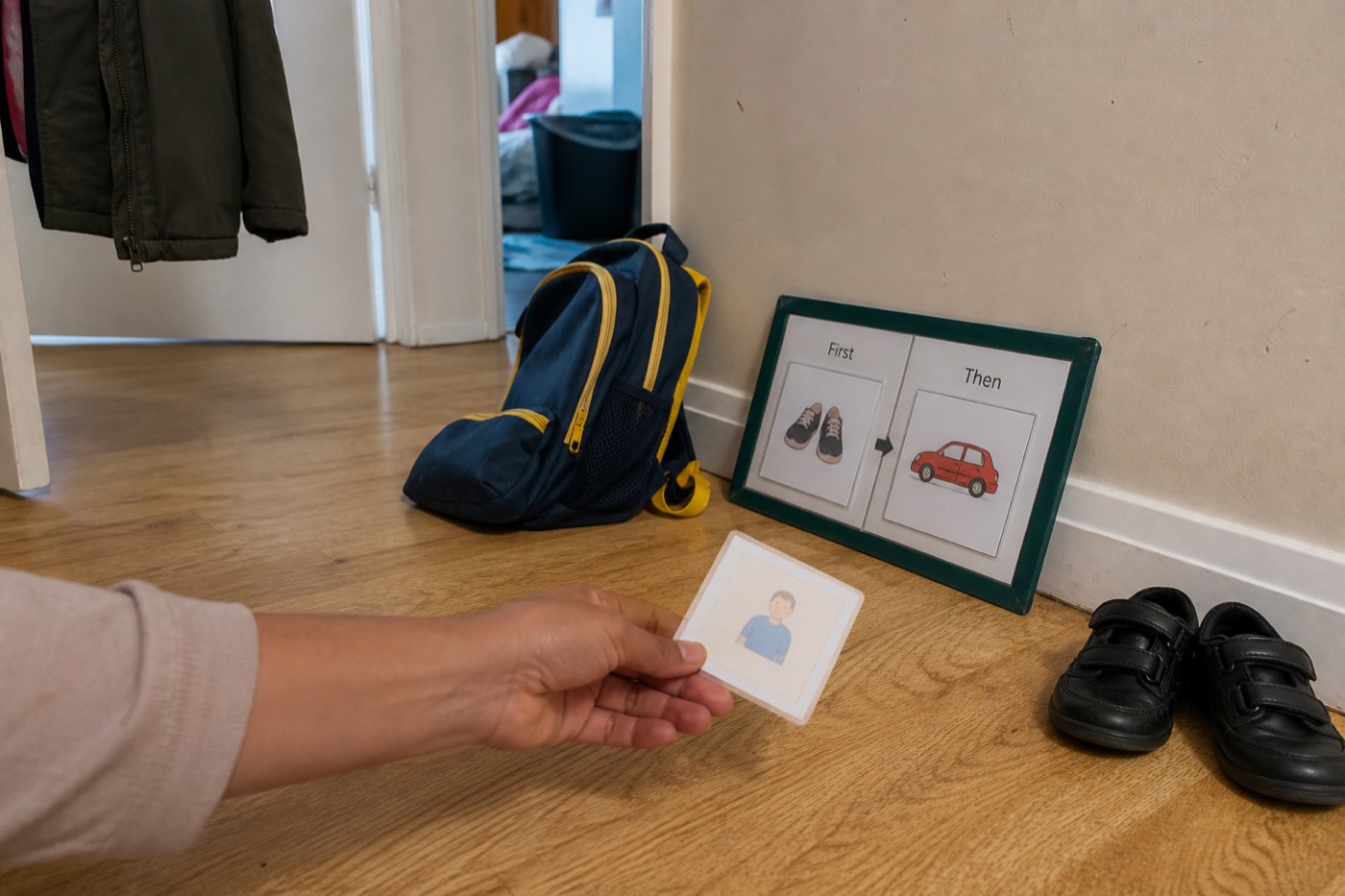
Uncertainty fuels anxiety. Use a visual schedule for the morning and the school day, photos of staff and rooms, a clear plan for "what happens if I feel panicky," and warning before any changes. Knowing exactly what to expect makes school feel far safer.
Build a graded, step-by-step return
A graded return breaks the mountain into stairs. Steps are individual, but might look like:
- Driving past or walking up to school at a quiet time
- A short visit to meet the key adult in an empty classroom
- Attending one favourite lesson, then leaving
- Building up the hours gradually, at your child's pace
Go at the speed of your child's nervous system, not the calendar. Celebrate every small win, expect wobbles and the odd step back, and never frame a hard day as failure.
Calm mornings matter
A tense, rushed, high-conflict morning sets the day up to fail. Prepare the night before, keep talk minimal and warm, and drop the threats and bribes — they add pressure to a child who is already overwhelmed. Communication tools like picture cards can help your child show how they feel when words won't come.
Supporting at home and getting extra help
Your home is your child's recovery base. Protecting it — and yourself — is part of the plan, not a distraction from it.
At home
- Keep mornings low-conflict. End the daily battle; it harms your relationship and rarely improves attendance.
- Validate feelings. "This feels really scary and I believe you" does far more than "there's nothing to worry about."
- Protect downtime. Build in quiet recovery after any school time, and watch for signs of burnout and rising anxiety.
- Look after the relationship. Connection and trust are what your child will lean on to take brave steps.
Getting extra help
You don't have to manage this alone. Depending on where you live, support may include:
- Your GP and child mental-health services (such as CAMHS) for anxiety
- An educational psychologist, who can assess needs and advise school on EBSA
- Attendance or education-welfare staff — ask for a supportive, not punitive, approach
- Knowing your child's rights and the formal routes to extra support if needs aren't being met. Start with school support and IEP basics.
If a return still isn't working
If, despite real adjustments and support, mainstream school simply isn't right at the moment, it's okay to explore other paths — a specialist placement, education otherwise than at school (EOTAS), or home education. These are big decisions best made with professional advice and your child's wellbeing at the centre, never out of panic. There is more than one way to get a good education, and a child who feels safe can learn.
Frequently asked questions
Is my child being naughty by refusing school, or is something wrong?
It's almost never naughtiness. What looks like refusal is usually emotionally based school avoidance — overwhelming anxiety that makes attending feel impossible. Genuine distress, physical symptoms like tummy aches, and panic on school mornings are signs your child can't cope, not won't behave. Treating it as defiance and punishing it tends to make the anxiety, and the avoidance, much worse.
What is EBSA (emotionally based school avoidance)?
EBSA is the term professionals now use instead of "school refusal" because it captures the real cause — emotional distress and anxiety, rather than a deliberate choice. It sits on a spectrum from occasional reluctance to being completely unable to attend, and often comes with physical symptoms and morning distress. The focus is on understanding and reducing the anxiety, not forcing attendance.
Why is my autistic child suddenly unable to go to school?
A sudden change usually means something has tipped them over the edge — new sensory demands, a change of teacher or routine, bullying, increased academic pressure, or a build-up of masking that's led to burnout. Autistic children can hold things together for a long time, then hit a wall. Look for what changed recently, and gently check for bullying, which is a very common hidden trigger.
Should I force my autistic child to attend school?
Forcing a terrified child through the gates may work once, but it usually deepens the fear and damages trust, making each day harder. A gentler, graded return — small achievable steps at your child's pace, after the triggers are reduced — is far more effective and lasting. The aim is to rebuild a sense of safety, not to win a single morning's battle.
What adjustments can school make to help my child attend?
Plenty. Common adjustments include a key trusted adult, a quiet safe space, a sensory or time-out pass, a flexible or staggered start, support during break and lunch, advance notice of changes, and a temporary reduced timetable as a bridge back in. Ask for a meeting with the teacher and SENCO, and have any agreed adjustments written into your child's support plan with a date to review them.
Who can help if my child still can't attend?
Several people. Your GP and child mental-health services (such as CAMHS) can help with anxiety; an educational psychologist can assess needs and advise school; and attendance or education-welfare staff should support rather than penalise. If needs aren't being met, learn your rights and the formal routes to extra support. If mainstream school isn't working despite real adjustments, you can explore specialist placements, EOTAS or home education with professional advice.
Sources and content notes
Published by Autism Parent Guide. This is general educational information.
Clinical review involvement
General practitioner (GP) — name withheld
A general practitioner (GP), who prefers to remain anonymous, has been involved in reviewing the site since its development began and as content has been added. This describes ongoing involvement in the site. Individual article review dates and the scope of each review are not currently published.
References for this guide
- Attendance problems: parents and carersNational Autistic Society
- What can my autistic child get support with at school?National Autistic Society
Content updated . This date records an editorial change, not a clinical review. Read our editorial policy or report a correction.
Keep reading & doing
Not medical advice. This article is general information, not a substitute for professional assessment. Every child is different — always talk to a qualified professional about your individual child.