Mainstream or Special School for an Autistic Child? How to Decide
On this page
What you can do today
- Write a short, honest profile of your child: strengths, what they find hard, and how they cope with noise, crowds and change.
- List the school types realistically available where you live — mainstream, specialist, and any units or resource bases in between.
- Book in-person visits to two or three settings, ideally during a normal, busy part of the school day.
- Prepare a few specific questions about autism training, class size, sensory spaces and how staff handle meltdowns.
- Read up on your local support-plan and funding system so you understand your right to express a preference.
- Talk to other local parents of autistic children about their real experiences of each setting.
What mainstream and special schools offer
Before you can compare settings, it helps to be clear about what each type genuinely offers — and to set aside the assumption that one is automatically "better." Both can be the right home for an autistic child, and both can be the wrong one. It depends on the fit.
Mainstream school
A mainstream (ordinary) school educates autistic children alongside their non-autistic peers. The potential strengths are real: a broad curriculum, everyday role models for social and communication skills, a local school close to home and friends, and the chance to stay part of the wider community. The level of autism support inside a mainstream school varies enormously, though — from excellent, well-resourced provision to very little. The quality of support matters far more than the label "mainstream."
Special (specialist) school
A special or specialist school is designed for children with additional needs, sometimes specifically for autistic pupils. The usual strengths are smaller classes, a higher ratio of adults to children, staff trained in autism, a calmer and more sensory-aware environment, and a curriculum tailored to how each child learns and communicates. The trade-off some families weigh is fewer non-autistic peers and, in some places, a longer journey to get there.
The middle ground: units and resource bases
Many areas offer something in between — often called a resource base, unit, or specialist provision attached to a mainstream school. Children are part of a smaller, supported group with autism-trained staff but can join mainstream lessons and playtimes when it suits them. For a lot of families this blend of belonging and specialist support is the sweet spot, so it is well worth asking whether one exists near you.
Start with your child's needs
The most useful question is not "which school is best?" but "which setting fits this child, as they are now?" Begin by building an honest picture of your child, then ask what each setting can realistically provide to match it.
Think across these areas
- Communication. How does your child express themselves and understand others? A child who uses few or no spoken words, or who relies on picture cards or other communication tools, needs staff who are fluent and comfortable with that. See helping a non-speaking child for context.
- Sensory profile. Busy corridors, echoing halls, strip lighting and constant noise can overwhelm a sensitive child. If your child experiences sensory overload easily, a calmer, smaller environment may matter more than anything else.
- Social and emotional needs. Does your child seek out other children, or find groups exhausting? How do they cope when things go wrong — and what does the setting do when a child has a meltdown?
- Coping with change. Many autistic children find transitions hard. A school with many room changes, teachers and last-minute switches asks a lot of a child who needs predictability. Read more on coping with change.
- Academic profile and anxiety. Is your child keeping pace academically, ahead, or needing a very different approach? And how high is their anxiety? Persistent school-related anxiety or refusal is an important signal that the current fit may be wrong.
Write this down as a one-page profile. It becomes the lens for every visit and every conversation — and it is exactly the kind of document that helps schools and any support-plan process understand your child quickly.
Questions to ask when you visit
Brochures and websites tell you what a school wants you to see. A visit — ideally during a normal, busy part of the day rather than a polished open evening — tells you what it is actually like. Watch how staff speak to the children, how calm or chaotic the corridors feel, and whether you can picture your child there.
Specific questions worth asking
- Training: How many staff are trained in autism, and how recently? Is there a special-needs coordinator, and will you meet them?
- Class size and support: How many children per class, and how many adults? Will your child have consistent, named support, or does it change day to day?
- Sensory environment: Is there a quiet or calm space your child can use? Can they leave a noisy room before they reach crisis point?
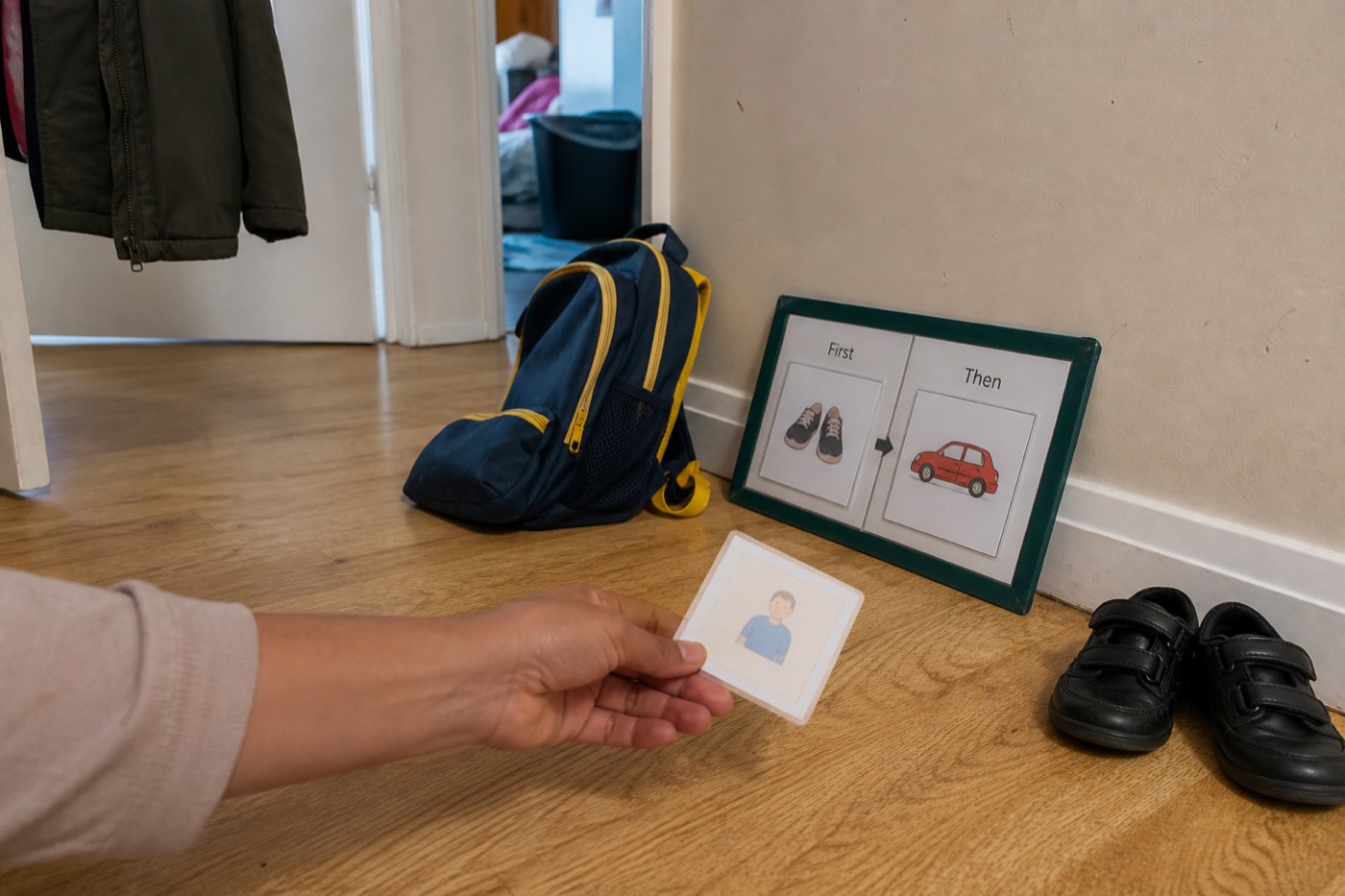
- Communication: How do staff support children who communicate differently? Are visual supports and visual schedules used as standard?
- Behaviour and distress: How do they respond when a child has a meltdown or shutdown? Listen for understanding and de-escalation rather than punishment.
- Transitions: How will they help your child settle in, and how do they manage changes during the day?
- Working with parents: How will they keep in touch, and how are you involved in decisions and in your child's support plan?
Trust what you observe
Notice your own gut feeling alongside the answers. A school can tick every box on paper and still feel wrong — or feel warm and right in a way that is hard to put into words. You know your child better than anyone in the building, so give that instinct real weight.
It's a decision you can revisit
Perhaps the most reassuring thing to hold onto is that this choice is not carved in stone. Children change, their needs change, and schools change too. A setting that suits a quiet five-year-old may not suit a teenager managing heavier demands — and that is completely normal, not a failure of your original decision.
Build in regular reviews
Wherever your child ends up, keep checking how it is going. Are they making progress and, just as importantly, are they happy and able to cope? Most countries have a formal support-plan or review process where you can raise concerns and ask for changes. Use it. Persistent unhappiness, escalating anxiety, regression, or a child who is melting down daily after school are all signs to pause and reassess the fit rather than push harder.
You can move your child
If a setting genuinely is not working, changing schools is allowed and sometimes exactly the right call. It can feel daunting, but many families look back and wish they had moved sooner. A move is a response to your child's needs, not a sign that anyone got it wrong.
A note on systems and your rights
Education systems differ widely from country to country, but most share two principles worth knowing. First, there is usually a formal plan or document — names vary — that can describe your child's needs and the support, and sometimes the type of setting, they should receive. Second, you generally have the right to express a preference about where your child is educated and to be part of the decision. Find out how this works where you live, ask your child's health team, school, or a national autism organisation for guidance, and don't be afraid to ask questions or appeal if you disagree. Understanding your local school-support and plan basics puts you in a far stronger position to choose well.
Frequently asked questions
Is mainstream or special school better for autism?
Neither is automatically better — it depends entirely on your individual child. A confident child who copes with noise, change and a busy environment may thrive in a well-supported mainstream school, while a child with higher support needs or strong sensory sensitivity may do far better in a smaller specialist setting. The right answer comes from matching your child's profile to what each school can realistically provide, not from the label on the gate.
What questions should I ask when visiting a school?
Ask specific, practical questions: how many staff are trained in autism, the class size and adult-to-child ratio, whether there is a quiet or sensory space, how staff support children who communicate differently, and how they respond when a child is distressed or has a meltdown. Visit during a normal, busy part of the day if you can, watch how staff speak to children, and trust your gut feeling about whether your child would belong there.
Can I change schools if it isn't working?
Yes. School choice is not permanent — if a setting genuinely is not meeting your child's needs, you can move them, and many families wish they had done so sooner. Most education systems have a regular review process where you can raise concerns and request changes. Persistent unhappiness, rising anxiety, regression or daily meltdowns are signals to reassess the fit rather than keep pushing.
What is a resource base or unit?
A resource base or unit is a specialist provision usually attached to a mainstream school. Children belong to a smaller, supported group with autism-trained staff but can join mainstream lessons and playtimes when it suits them. For many families this blend offers the best of both worlds — specialist support alongside the chance to be part of the wider school community — so it is well worth asking whether one is available near you.
Sources and content notes
Published by Autism Parent Guide. This is general educational information.
Clinical review involvement
General practitioner (GP) — name withheld
A general practitioner (GP), who prefers to remain anonymous, has been involved in reviewing the site since its development began and as content has been added. This describes ongoing involvement in the site. Individual article review dates and the scope of each review are not currently published.
References for this guide
- Children with SEND: extra help and education, health and care plans (England)GOV.UK
- What can my autistic child get support with at school?National Autistic Society
Content updated . This date records an editorial change, not a clinical review. Read our editorial policy or report a correction.
Keep reading & doing
Not medical advice. This article is general information, not a substitute for professional assessment. Every child is different — always talk to a qualified professional about your individual child.