Starting School With Autism: Preparing for the Transition
On this page
What you can do today
- Arrange a quiet-time visit to the school and the actual classroom your child will use.
- Take photos of the building, the gate, key staff and the journey — start a simple "my school" book.
- Write a one-page profile: your child's strengths, triggers, what calms them, and how they communicate.
- Email the SENCO (or special-education lead) to ask for a meeting before term starts.
- Practise the morning routine and the school run a few times in advance.
- Block out quiet, low-demand downtime after school for the first few weeks.
Preparing your child for the change
Most of the fear around starting school comes from the unknown. The more you can turn "I have no idea what happens" into "I know exactly what happens," the calmer your child is likely to be. Start early — weeks, not days, before term.
Make the new place familiar
- Visit in advance, ideally at a quiet time (after hours, in the holidays, or during a settling-in session) so the building isn't overwhelming. Walk to the classroom, the toilets, the cloakroom and the lunch hall.
- Take photos of the gate, the classroom, the teacher and any key staff, then look at them together at home. A simple "my school" photo book is reassuring to revisit.
- Practise the journey — the walk, the bus or the car route — so the school run itself isn't a fresh shock on day one.
Talk it through, concretely
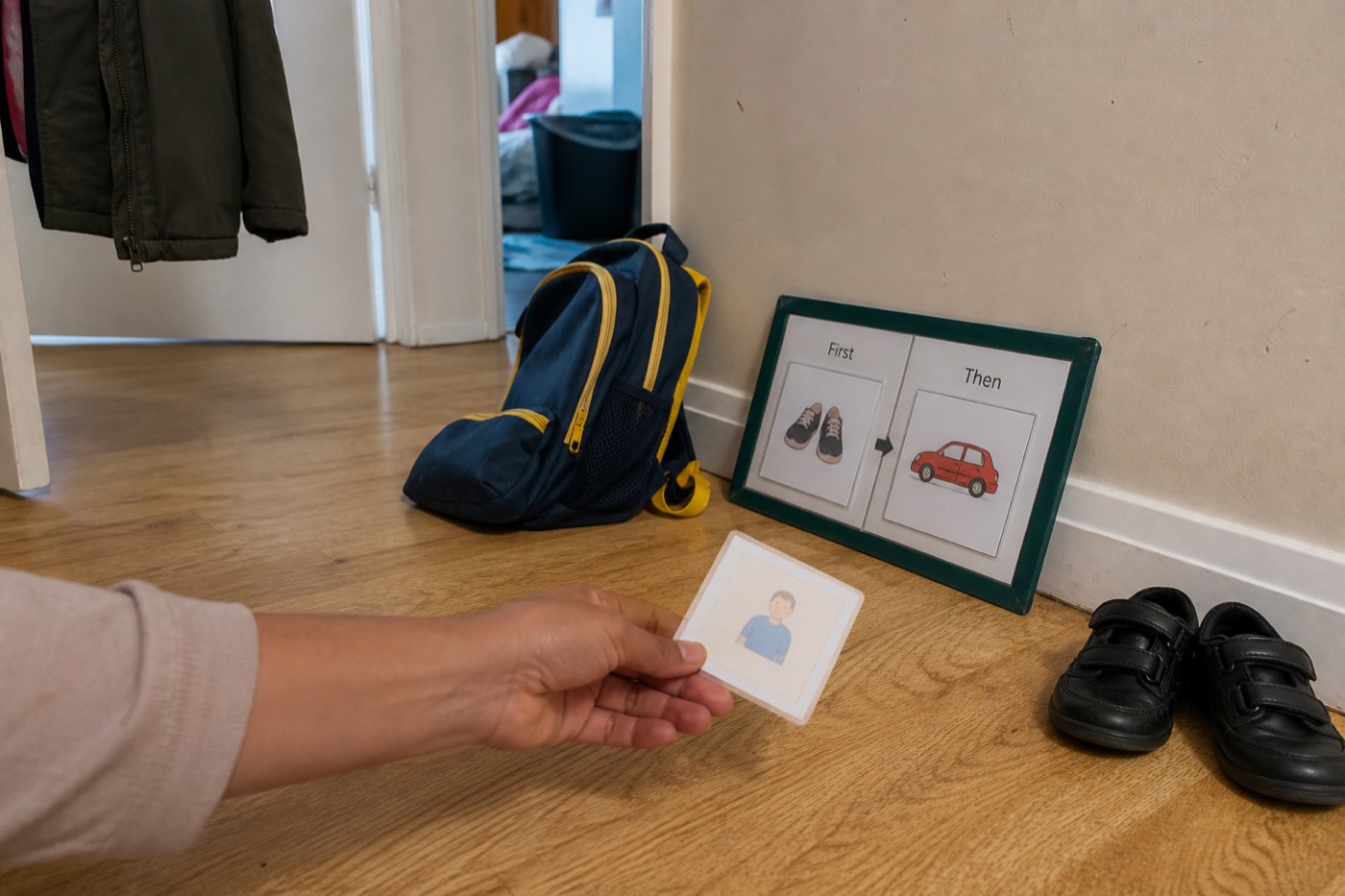
Use clear, literal language about what will happen and in what order: hang up your coat, sit on the carpet, play, lunch, home time. A social story about the first day — written from your child's point of view — is one of the most powerful tools here. So is a visual schedule of the school day they can hold and check.
Reduce the unknown further
- Use a countdown (a strip of days to cross off, or a visual calendar) so the start date isn't a surprise.
- Pack a small comfort or transitional object if the school allows it — something from home that travels with them.
- Try on the uniform early so any scratchy seams, stiff shoes or new textures aren't a day-one battle.
Working with the new school before day one
Your child will spend a huge part of their week with these adults. Building a warm, honest relationship with them before term starts pays off all year — and it tells school you're a partner, not a problem.
Meet the right people early
Ask to meet the class teacher and the SENCO (the special-education needs coordinator, or your country's equivalent) before the start of term. Bring the practical detail they actually need to help your child from day one.
Share a one-page profile
A one-page profile is exactly what it sounds like: a single sheet that introduces your child quickly. Keep it strengths-first and practical. Include:
- What people like and admire about your child, and their interests.
- What helps — routines, visuals, warnings before change, a calm voice.
- Triggers and early-warning signs — what overwhelm looks like before it tips into a meltdown.
- How they communicate — speech, picture cards, signs, a device — and how to know what they need.
- Sensory needs — sounds, lights, textures, food, and what soothes them.
Agree the supports up front
Don't wait for things to go wrong. Ask about:
- A key adult your child can go to, and a safe space they can use when overwhelmed.
- A visual timetable in the classroom and warnings before transitions.
- A flexible or staggered start (a soft start, a later drop-off, or shorter days at first).
- Sharing any existing support plan — an IEP, EHCP or your region's equivalent — so the team works from the same page. See school support and IEP basics for what to ask for.
Finally, agree how you'll stay in touch — a home-school communication book or a quick daily email beats finding out about a hard week at parents' evening.
Surviving the first weeks
Even with brilliant preparation, the first weeks are genuinely hard. It helps enormously to expect that, so you're not blindsided when your bright, settled child falls apart on the doorstep.
What's normal in the early weeks
- Exhaustion. Holding it together in a new, loud, social environment all day is draining. Many children come home shattered.
- After-school meltdowns or shutdowns. A child who seems "fine all day" at school often releases the whole day's tension the moment they're home. This is the after-school restraint collapse — a sign of trust, not of a bad day with you.
- Regression and wobbles. Sleep, eating and toileting can all take a temporary step back while everything else changes.
How to help them recover
- Protect downtime. Build in quiet, low-demand decompression straight after pick-up — no questions, no clubs, no rush. Let them stim, rest or retreat.
- Keep home calm and predictable. A reliable home routine is a safe anchor while school is still new.
- Go easy on everything else. This isn't the term to also drop the dummy, start swimming lessons or rearrange the bedroom.
- Stay in touch with school. Share how the evenings are going — meltdowns at home are real evidence of how hard the day was, even if school saw a "model pupil."
Most of all, give it time. Settling is measured in weeks and half-terms, not days.
If your child is really struggling
Sometimes, despite everyone's best efforts, settling just isn't happening — the distress keeps building rather than easing. Trust your instincts and act early.
Revisit the plan with school
Go back to the team and look again at the adjustments. What's actually being used day to day? Is the key adult available? Is the safe space working? Often the fix is making agreed supports real and consistent, not inventing new ones.
Look for the unmet need
Growing distress, avoidance, more meltdowns or physical complaints (tummy aches, headaches, dread on Sunday nights) usually point to an unmet need or rising anxiety — not defiance. Play detective: is it the noise, a particular lesson, the playground, a relationship, masking exhaustion? Something is being communicated.
Consider pacing the start
- A phased or part-time start — fewer days or shorter days, built up gradually — can give an overwhelmed nervous system room to cope.
- A graded return is also the standard approach if attendance has broken down. If your child is reaching the point of being unable to attend, read autism and school refusal (EBSA).
Know your options and rights
If the support genuinely isn't adequate, you have routes: ask for a formal review of needs, request involvement from an educational psychologist or specialist outreach team, and find out about your local rights and assessment processes through school support and IEP basics. You are allowed to push for the right help — your child's wellbeing comes first.
Frequently asked questions
How do I prepare my autistic child for starting school?
Reduce the unknown as much as you can. Visit the school and classroom in advance at quiet times, take photos to look at together, practise the journey and morning routine, and use a social story and visual schedule to show exactly what will happen. Start weeks ahead, not days, and pack a comfort object if school allows it.
What should I tell the new school about my child?
Share a one-page profile covering your child's strengths and interests, their triggers and early-warning signs, how they communicate, their sensory needs, and — most importantly — what actually helps them calm down. Meet the teacher and SENCO before term and agree practical supports up front rather than waiting for problems to appear.
Why is my child so exhausted and emotional after starting school?
Coping with a loud, social, unpredictable environment all day is genuinely exhausting, and many autistic children hold it together at school then release all that tension at home. After-school meltdowns and shutdowns are a normal sign of how hard the day was, and of how safe they feel with you — not a sign you're doing anything wrong.
What is a one-page profile?
It's a single sheet that introduces your child to staff quickly and practically. It usually covers what people like and admire about them, what helps and supports them, what they find hard, how they communicate, and their sensory needs. Kept strengths-first and concrete, it gives a new teacher the essentials to help from day one.
How long does it take an autistic child to settle into school?
There's no fixed timeline, but settling is usually measured in weeks and half-terms rather than days. Expect tiredness, wobbles and emotional first weeks. Keep home calm and predictable, protect downtime, stay in close contact with school, and give it time — most children gradually find their feet as the environment becomes familiar.
What if my child can't cope with starting school?
Act early rather than waiting it out. Revisit the agreed adjustments with school to make sure they're actually happening, look for the unmet need or rising anxiety behind the distress, and ask about a phased or part-time start. If attendance is breaking down, this may be emotionally based school avoidance, which needs support, not pressure — and you have routes to push for better help.
Sources and content notes
Published by Autism Parent Guide. This is general educational information.
Clinical review involvement
General practitioner (GP) — name withheld
A general practitioner (GP), who prefers to remain anonymous, has been involved in reviewing the site since its development began and as content has been added. This describes ongoing involvement in the site. Individual article review dates and the scope of each review are not currently published.
References for this guide
- What can my autistic child get support with at school?National Autistic Society
- Supporting an autistic childNHS
Content updated . This date records an editorial change, not a clinical review. Read our editorial policy or report a correction.
Keep reading & doing
Not medical advice. This article is general information, not a substitute for professional assessment. Every child is different — always talk to a qualified professional about your individual child.